
Cryogenic tank materials must maintain structural integrity, fracture resistance, and dimensional stability at extremely low temperatures while withstanding internal pressure, thermal contraction, and repeated operating cycles. The appropriate material depends on the stored medium, design temperature, pressure, corrosion environment, fabrication requirements, and applicable pressure vessel codes. Common materials used in cryogenic equipment include austenitic stainless steel, nickel steel, aluminum alloys, and selected structural steels. Each material offers different advantages in terms of low-temperature toughness, strength, corrosion resistance, weight, weldability, and cost. This engineering guide explains the properties of cryogenic tank materials, compares commonly used material grades, and outlines the key factors engineers consider when selecting materials for LNG, liquid nitrogen, liquid oxygen, liquid argon, liquid carbon dioxide, and hydrogen applications.
1. What Materials Are Used in Cryogenic Tanks?
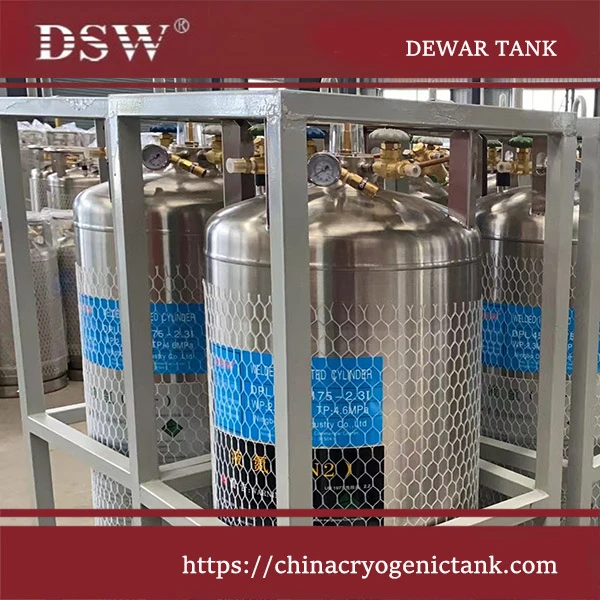
Cryogenic tanks are designed to store or transport fluids at temperatures substantially below ambient conditions. Their material requirements differ from those of conventional storage vessels because low temperatures can significantly affect toughness, ductility, thermal contraction, and fracture behavior. The principal materials used in cryogenic tank construction include:
- Austenitic stainless steel: Commonly used for inner vessels because of its low-temperature toughness, corrosion resistance, and weldability.
- Nickel steel: Certain nickel-alloyed steels, including 9% nickel steel, are used in specified LNG containment applications where the design and applicable standards permit.
- Aluminum alloys: Used in selected cryogenic vessels and transport equipment because of their low-temperature performance and favorable strength-to-weight ratio.
- Carbon steel: Used for outer jackets, supports, foundations, and other structural components when the material temperature and design requirements permit.
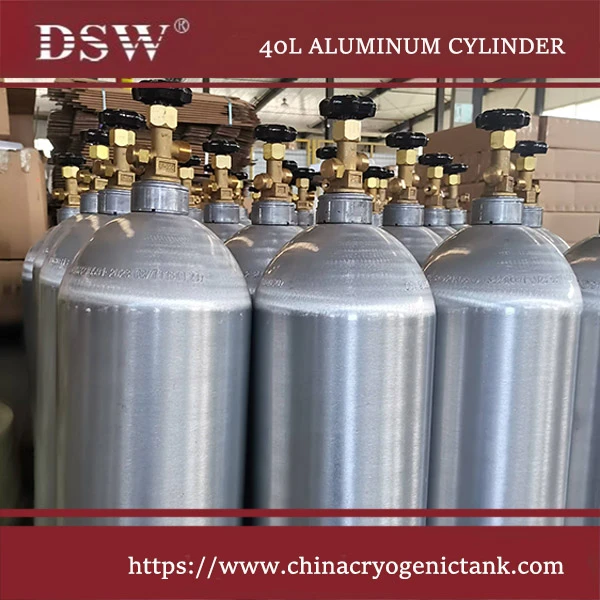
- Fiber-reinforced composites: Used in selected high-pressure gas cylinders and specialized hydrogen storage systems. Their suitability for cryogenic liquid service must be established separately.
Material selection should consider the complete vessel or tank design rather than the material name alone. The specified grade, product form, thickness, welding process, heat treatment, operating temperature, and design code all influence suitability.
2. Cryogenic Tank Material Comparison
The following table summarizes commonly considered materials and their typical engineering applications. These are general selection guidelines, not substitutes for material qualification or pressure vessel design calculations.
| Material | Key Properties | Typical Applications | Important Considerations |
|---|---|---|---|
| 304L stainless steel | Excellent low-temperature toughness and good weldability | Industrial cryogenic vessels, LN2, LOX and LAr equipment | Verify grade, thickness, design conditions, and fluid compatibility |
| 316L stainless steel | Low-temperature toughness and enhanced resistance to many corrosive environments | Chemical, marine, and selected cryogenic equipment | Higher cost; hydrogen compatibility requires application-specific assessment |
| 9% nickel steel | Low-temperature toughness in qualified grades and conditions | Specified large LNG containment systems | Requires compliance with applicable material and fabrication requirements |
| Aluminum alloys | Low density and useful low-temperature mechanical properties | Selected cryogenic vessels, transport equipment, and aerospace systems | Alloy, temper, weld performance, and design allowables must be verified |
| Carbon steel | Economical and widely used for structural fabrication | Outer jackets, supports, and qualified low-temperature applications | Ordinary grades may lack adequate toughness at cryogenic temperatures |
| Carbon fiber composites | High specific strength and low weight | Selected high-pressure gas cylinders and specialized storage systems | Permeation, liner behavior, thermal cycling, and cryogenic compatibility require validation |
Austenitic stainless steel is a common choice for industrial cryogenic inner vessels. However, large LNG containment systems may use different material systems, including qualified nickel steel, depending on tank type, construction method, and design requirements.
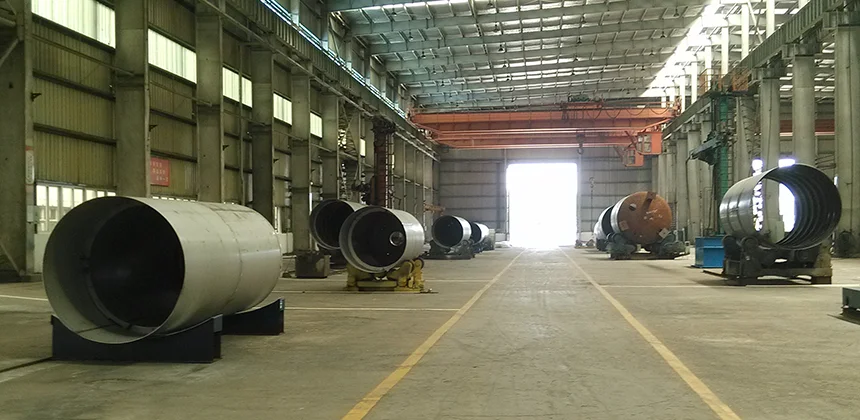
3. 304L vs. 316L Stainless Steel for Cryogenic Tanks
Grades 304L and 316L are low-carbon austenitic stainless steels widely considered for cryogenic equipment. Both can provide good toughness at very low temperatures when the specified material condition, fabrication procedures, and design requirements are satisfied. The main difference is corrosion resistance rather than a fundamental difference in cryogenic capability.
304L Stainless Steel
304L stainless steel is frequently used in industrial cryogenic vessels because it combines low-temperature toughness, weldability, availability, and cost-effectiveness.
- Good ductility and fracture resistance at cryogenic temperatures.
- Suitable for many welded vessel constructions.
- Commonly considered for liquid nitrogen, liquid oxygen, liquid argon, and selected LNG equipment.
- Generally economical compared with 316L for similar product forms.
Its suitability must still be verified against the design pressure, minimum design metal temperature, corrosion environment, material specification, and applicable construction code.
316L Stainless Steel
316L stainless steel contains molybdenum, which improves resistance to many forms of corrosion, particularly in chloride-containing environments. It may be preferred when the surrounding environment or process conditions justify the additional material cost.
- Good low-temperature toughness in appropriate material conditions.
- Improved resistance to many pitting and crevice corrosion environments compared with 304L.
- Used in selected chemical, marine, and specialized cryogenic equipment.
- Requires the same attention to welding quality, cleanliness, and design-code compliance as other pressure-boundary materials.
316L should not automatically be considered the best choice for every hydrogen application. Hydrogen service requires a separate assessment of temperature, pressure, hydrogen phase, stress state, material properties, and applicable qualification requirements.
304L vs. 316L: Key Differences
| Property | 304L | 316L |
|---|---|---|
| Low-temperature toughness | Excellent in suitable conditions | Excellent in suitable conditions |
| Corrosion resistance | Good in many environments | Better resistance to many chloride-related corrosion mechanisms |
| Material cost | Generally lower | Generally higher |
| Fabrication | Good weldability | Good weldability |
| Selection priority | General industrial cryogenic service | Applications with more demanding corrosion requirements |
Engineering recommendation: Choose 304L when it meets the design and environmental requirements at a favorable lifecycle cost. Consider 316L when its improved corrosion resistance provides a meaningful operational benefit. Neither grade should be selected solely by comparing its nominal composition or purchase price.
4. How Cryogenic Temperatures Affect Material Performance
Materials do not all respond to extreme cold in the same way. Engineers must understand the relationship between temperature, crystal structure, fracture behavior, and mechanical loading when designing cryogenic pressure vessels.
Ductility and Fracture Toughness
Ductility describes a material’s ability to deform before fracture, while fracture toughness characterizes its resistance to crack propagation under specified conditions. A material may retain high tensile strength at low temperatures yet still present a brittle-fracture risk if its fracture toughness is insufficient. Many ferritic and body-centered cubic steels exhibit a ductile-to-brittle transition over a temperature range. Austenitic stainless steels generally retain good ductility and toughness at cryogenic temperatures, making them common choices for low-temperature pressure boundaries.
Thermal Contraction
Cooling causes most engineering materials to contract. Because different materials contract by different amounts, temperature changes can introduce stresses at welds, supports, connections, and dissimilar-material interfaces. Designers should account for differential contraction, clearances, support flexibility, piping loads, and temperature gradients when assessing the vessel and its connected systems.
Thermal Cycling and Fatigue
Repeated filling, emptying, cooling, and warming can produce cyclic stresses. Over time, these stresses may contribute to fatigue damage, especially near welds, nozzles, geometric discontinuities, and other stress concentrations. The design should consider the expected operating cycles, temperature distribution, pressure variations, and fabrication details.
Welding and Heat-Affected Zones
Weld metal and heat-affected zones can behave differently from the base material. Appropriate filler metals, qualified welding procedures, inspection methods, and material traceability help establish the required integrity of cryogenic pressure boundaries.
5. Material Selection by Cryogenic Liquid
The stored medium is a major factor in selecting cryogenic tank materials. Operating temperature, pressure, purity, chemical compatibility, and containment requirements vary by application.
LNG Storage
Liquefied natural gas is stored at approximately -162°C under conditions determined by the tank design and operating pressure. Austenitic stainless steel is used in many industrial cryogenic vessels and LNG equipment. Large LNG containment systems may instead employ qualified 9% nickel steel or other specified materials appropriate to the containment design. Material selection must account for minimum design metal temperature, fracture resistance, weld qualification, pressure or hydrostatic loading, and the applicable LNG tank construction standard.
Liquid Nitrogen Storage
Liquid nitrogen boils at approximately -196°C at atmospheric pressure. Materials used in its storage equipment must retain adequate toughness and mechanical integrity at the specified minimum temperature. 304L stainless steel is commonly used for inner vessels in industrial liquid nitrogen storage systems. The complete design must also address vacuum integrity, insulation performance, thermal contraction, support loads, and the pressure boundary.
Liquid Oxygen Storage
Liquid oxygen boils at approximately -183°C at atmospheric pressure. In addition to cryogenic performance, liquid oxygen equipment requires strict control of material compatibility, cleanliness, contamination, and ignition hazards. Stainless steel is commonly used in oxygen service when appropriately selected and prepared. Material selection alone does not ensure oxygen safety: component design, cleaning procedures, nonmetallic materials, lubricants, and operating conditions must also satisfy the applicable oxygen-service requirements.
Liquid Argon Storage
Liquid argon boils at approximately -186°C at atmospheric pressure. Its low storage temperature requires materials with suitable cryogenic toughness and thermal-cycle performance. Austenitic stainless steel is widely used in industrial liquid argon vessels. Vacuum-insulated, double-wall construction is common where reduced heat ingress and long holding times are required.
Liquid Carbon Dioxide Storage
Liquid carbon dioxide storage differs from atmospheric-pressure cryogenic storage because CO2 must be maintained within an appropriate pressure-temperature range to remain liquid. The required temperature depends on the design pressure and intended operating conditions. Carbon steel or stainless steel may be used in suitable CO2 storage equipment, subject to design conditions, corrosion considerations, material toughness, and the applicable construction code. Moisture and impurities can influence corrosion behavior and should be considered in the material specification.
Liquid Hydrogen Storage
Liquid hydrogen boils at approximately -253°C at atmospheric pressure. This extreme temperature creates demanding requirements for material toughness, thermal contraction, sealing, insulation, and heat-leak control. Selected austenitic stainless steels and aluminum alloys are used in liquid-hydrogen systems, depending on the vessel architecture and design requirements. Hydrogen compatibility must be evaluated for the actual temperature, phase, pressure, stress state, and material condition. High-pressure gaseous hydrogen cylinders reinforced with carbon fiber composites are a different equipment category from conventional liquid-hydrogen cryogenic tanks. Their material qualification and containment requirements should not be assumed to apply interchangeably.
6. Inner Vessel and Outer Shell Materials
Many stationary cryogenic tanks use a double-wall construction consisting of an inner vessel and an outer shell. The two components perform different functions and may require different material specifications.
Inner Vessel
The inner vessel contains the cryogenic fluid and forms the primary pressure boundary. Its material must meet the specified requirements for minimum design temperature, pressure, mechanical strength, fracture resistance, weldability, and fluid compatibility. Austenitic stainless steel is common in many industrial cryogenic vessels. Other materials may be suitable for specific tank designs when permitted by the governing code and supported by the required engineering assessment.
Outer Shell
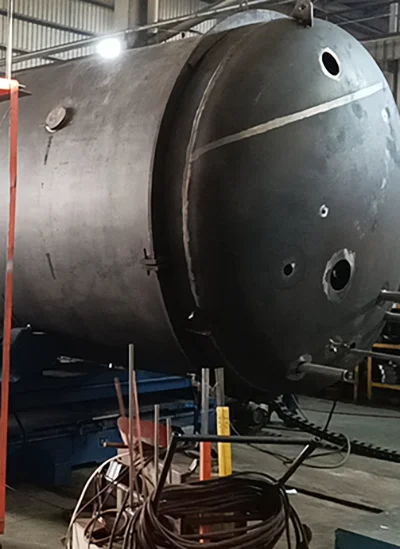
The outer shell protects the insulation system and provides structural enclosure. In vacuum-insulated tanks, it also forms the boundary that maintains the insulating vacuum. Carbon steel is frequently used for outer jackets where the design temperature and environmental conditions permit. Stainless steel or other materials may be appropriate for special environments or design requirements.
Supports and Connections
Supports, saddles, piping connections, and internal components must accommodate loads, temperature changes, and differential contraction. Their materials and geometries should be selected to avoid excessive stress, unwanted heat transfer, and mechanical interference during operation.
Insulation System
Vacuum insulation, multilayer insulation, and other suitable insulation systems reduce heat transfer into the stored fluid. Insulation performance affects heat ingress and boil-off, but it does not replace the structural requirements of the pressure boundary. The material specification and insulation design should therefore be developed together with the vessel’s structural and thermal design.
7. Cryogenic Tank Material Selection Criteria
A reliable material selection process evaluates the complete operating environment rather than relying on a single property or a general material recommendation. The following factors should be considered during engineering and procurement.
- Minimum design metal temperature: Establish the lowest temperature the material and each relevant component may experience under normal operation and credible design conditions.
- Design pressure and mechanical loading: Verify allowable stress, wall thickness, external pressure resistance where relevant, support loads, and applicable code requirements.
- Stored medium: Evaluate fluid compatibility, purity requirements, corrosion mechanisms, oxygen-service hazards, and hydrogen-related material concerns.
- Fracture toughness: Confirm that the material has adequate low-temperature toughness under the applicable design and qualification requirements.
- Thermal contraction: Account for differential movement between the vessel, supports, piping, nozzles, and connected equipment.
- Fabrication and welding: Review forming limits, weldability, filler metal selection, qualified procedures, inspection, and repair requirements.
- Insulation and heat ingress: Coordinate material selection with the insulation system, thermal bridges, support design, and expected operating cycles.
- Corrosion and service environment: Assess external atmospheric exposure, process contamination, moisture, and cleaning requirements.
- Applicable standards: Identify the governing construction code, jurisdictional requirements, material specifications, and required inspections.
- Lifecycle cost: Consider fabrication, maintenance, inspection, energy losses, durability, and replacement costs rather than purchase price alone.
The final material specification should identify the exact grade and product form, applicable material standard, required mechanical properties, inspection requirements, and documentation needed for traceability.
Material selection is one part of the overall engineering process. Learn more about cryogenic vessel design requirements, including the factors that influence vessel configuration and design codes.
8. Cryogenic Tank Standards and Material Quality Control
Cryogenic tank materials must be selected and verified under the standards applicable to the equipment type, design, and installation jurisdiction. Different standards govern pressure vessels, cryogenic storage equipment, large LNG tanks, transport containers, and specific material products. Relevant standards may include the following, depending on the application:
Material certification and inspection are important parts of production quality control. See our overview of the cryogenic tank manufacturing process for more information about fabrication and quality checks.
- ASME Boiler and Pressure Vessel Code, Section VIII: Used for pressure vessel construction within its applicable scope.
- ISO 21028: Addresses toughness requirements for metallic materials used in cryogenic vessels within the standard’s scope.
- EN 13458: Covers static vacuum-insulated cryogenic vessels within its applicable scope.
- EN 14620: Relevant to the design and manufacture of certain site-built, vertical, cylindrical, flat-bottomed steel tanks for refrigerated liquefied gases, subject to its scope.
- Applicable material specifications: Define the required grade, product form, mechanical properties, testing, and acceptance criteria for the selected material.
Not every standard applies to every cryogenic tank. The responsible designer must confirm the current edition, applicable jurisdiction, vessel category, and any additional project-specific requirements.
Material Certificates and Traceability
Material certificates provide documented information about material identity, chemical composition, mechanical properties, and specified test results. Required certification and inspection levels depend on the governing code and project specification. Traceability should be maintained through material receipt, cutting, forming, welding, inspection, and final documentation.
Welding Qualification and Inspection
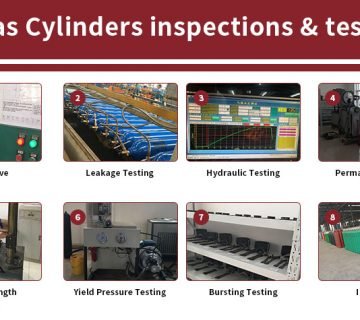
Welding procedures, personnel qualifications, filler metals, and inspection methods should comply with the governing construction code. Nondestructive examination, pressure or leak testing, and other verification activities should be specified according to the vessel design and applicable requirements.
Oxygen-Service Cleanliness
Equipment intended for liquid oxygen requires particular attention to cleanliness and contamination control. Appropriate cleaning, handling, assembly, and inspection procedures help reduce ignition hazards associated with contaminants in oxygen-enriched environments. Material selection and quality control must work together to establish the intended level of safety and reliability.
9. Common Material Selection Mistakes
Several common errors can lead to unsuitable specifications, unnecessary costs, or avoidable engineering risks.
- Selecting by material name alone: A grade designation does not establish suitability without the required product form, mechanical properties, design temperature, and code compliance.
- Assuming all stainless steel grades perform identically: Corrosion resistance, fabrication behavior, and specified properties vary by grade and application.
- Using ordinary carbon steel without low-temperature verification: The required toughness must be demonstrated for the intended temperature and loading conditions.
- Confusing cryogenic liquid tanks with high-pressure gas cylinders: These systems can have fundamentally different materials, pressure boundaries, insulation arrangements, and qualification requirements.
- Ignoring thermal contraction: Differential movement can introduce loads at supports, nozzles, welds, and piping connections.
- Overlooking insulation design: A suitable structural material does not compensate for poor vacuum integrity, excessive thermal bridges, or inadequate insulation.
- Applying standards outside their scope: The governing code must match the equipment type, operating conditions, and jurisdiction.
- Choosing solely on initial cost: Fabrication quality, maintenance, operating efficiency, inspection, and expected service life should inform the decision.
Avoiding these mistakes requires coordination between materials engineering, pressure vessel design, thermal engineering, fabrication, inspection, and procurement.
TECHNICAL FAQs
About Cryogenic Tank Materials
Austenitic stainless steels, such as 304L and 316L, are widely used for cryogenic tank inner vessels because they retain good toughness at very low temperatures. Depending on the stored liquid and tank design, other materials, including aluminum alloys and nickel steels, may also be suitable. The final choice depends on the operating temperature, pressure, corrosion conditions, fabrication requirements, and applicable design codes.
Certain grades of austenitic stainless steel maintain good ductility and fracture toughness at extremely low temperatures. They also offer good weldability and corrosion resistance, making them a reliable choice for many industrial cryogenic tanks. The specific grade must still meet the requirements of the intended service and tank design.
Both 304L and 316L are commonly used in cryogenic applications and can offer excellent low-temperature toughness when properly specified. The main difference is that 316L contains molybdenum, which generally improves resistance to chloride-related corrosion. 304L is often a more economical option, while 316L may be preferable in more corrosive environments. The best choice depends on the service conditions and material requirements.
Yes, carbon steel is commonly used for outer shells, supports, and other structural components when the design temperature allows. However, ordinary carbon steel is generally unsuitable for direct contact with cryogenic liquids because its toughness can decrease significantly at low temperatures. Any steel used in a cryogenic pressure boundary must be specifically qualified for the design temperature and comply with the applicable code.
Yes, aluminum alloys are suitable for many cryogenic applications because they maintain good toughness and strength at low temperatures while offering lightweight performance. They are commonly used in aerospace and mobile cryogenic systems.
Composite materials such as carbon fiber reinforced polymers are used in Type III and Type IV cryogenic pressure vessels. They provide high strength-to-weight ratios for hydrogen storage and mobile gas transportation systems.
Liquid hydrogen tanks commonly use carefully selected austenitic stainless steels or aluminum alloys that are suitable for service at approximately −253°C. Material selection must account for low-temperature toughness, thermal contraction, pressure, hydrogen compatibility, and the tank’s insulation system. Materials for liquid hydrogen storage also need to be assessed separately from those used in high-pressure gaseous hydrogen cylinders.
Tank material can influence heat transfer, but it does not determine the boil-off rate on its own. Boil-off is primarily affected by heat entering the stored liquid through the insulation, tank supports, piping, and other thermal paths. Vacuum integrity, tank geometry, ambient conditions, and operating practices also play important roles.
The applicable standards depend on the tank type, design, intended use, and country of installation. ASME Section VIII, ISO 21028, and EN 13458 address different aspects or categories of pressure equipment and cryogenic vessels. Designers and manufacturers should verify the current editions and confirm the requirements for material selection, fabrication, testing, and inspection that apply to the specific project.
Conclusion: Choosing the Right Cryogenic Tank Material
Cryogenic tank material selection requires a coordinated assessment of low-temperature toughness, mechanical strength, fracture resistance, corrosion behavior, thermal contraction, fabrication quality, and applicable design standards. 304L and 316L stainless steel are widely used in industrial cryogenic equipment, while qualified nickel steel, aluminum alloys, and other materials serve specific applications. The appropriate choice depends on the tank architecture, stored medium, operating conditions, and governing engineering requirements. A reliable specification should identify the exact material grade, demonstrate suitability for the design temperature and pressure, address welding and inspection, and coordinate the structural material with the insulation and support systems. Final selection should be verified by qualified engineering personnel against the applicable design code, material specifications, and project requirements.

No comment