
Cryogenic tanks are specialized vessels designed to store or transport liquefied gases at extremely low temperatures while maintaining controlled pressure and minimizing heat transfer. They are essential to industrial gas supply chains, energy infrastructure, chemical processing, healthcare, metallurgy and other applications that depend on reliable cryogenic liquid storage.
However, not all cryogenic tanks are designed for the same purpose. Their configurations vary according to storage capacity, installation requirements, transportation conditions, operating pressure, insulation technology and the properties of the stored medium.
Understanding these differences is important when specifying equipment for liquid nitrogen (LN₂), liquid oxygen (LOX), liquid argon (LAr), liquefied natural gas (LNG) and other liquefied products.
This guide examines the main types of cryogenic tanks from an engineering and application perspective, explaining their structural configurations, operational characteristics and typical industrial uses.
1. How Are Cryogenic Tanks Classified?
Cryogenic tanks are classified according to several independent design and operational characteristics. These classifications help engineers and project developers identify suitable equipment for different storage and transportation requirements.
The principal classification groups include:
| Classification | Main Types | Primary Consideration |
|---|---|---|
| Storage configuration | Dewars, microbulk and bulk tanks | Required storage volume and consumption |
| Installation orientation | Vertical and horizontal tanks | Site layout and foundation requirements |
| Operating arrangement | Stationary and transportable tanks | Permanent storage or liquid distribution |
| Transportation configuration | ISO tank containers, road tankers and semi-trailers | Transportation method and logistics |
| Insulation construction | Vacuum-insulated and other insulated vessels | Heat ingress and thermal performance |
| Stored medium | LN₂, LOX, LAr, LNG and other compatible liquids | Temperature, material compatibility and operating conditions |
These classifications are complementary rather than mutually exclusive. For example, a stationary vertical bulk tank may use vacuum insulation and be specifically designed for liquid oxygen storage.
2. Cryogenic Tanks by Storage Capacity and Supply Configuration
Storage capacity is one of the primary factors determining the type of cryogenic equipment required. The appropriate system depends on gas consumption, delivery frequency, available installation space and the continuity of supply required by the facility.
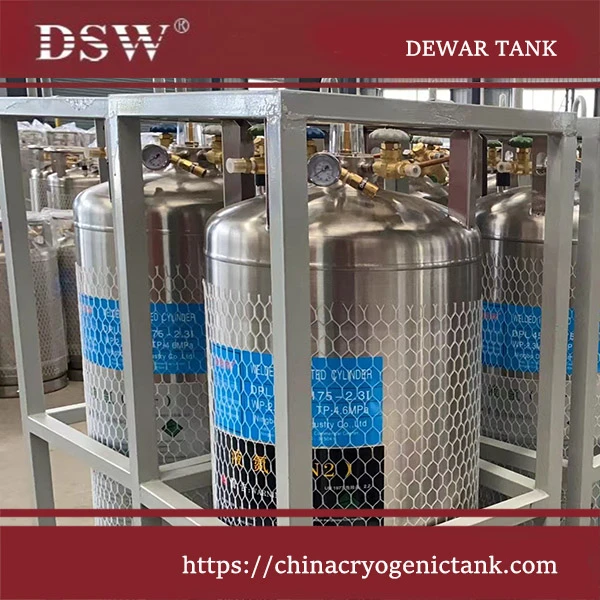
2.1 Cryogenic Dewars
Cryogenic dewars are relatively small, vacuum-insulated vessels designed for storing and handling limited quantities of cryogenic liquids.
They are commonly used in laboratories, medical facilities, research institutions and specialized industrial applications where relatively small quantities of liquid nitrogen or other compatible cryogens are required.
Depending on their design, dewars may be non-pressurized containers or pressurized liquid cylinders equipped with liquid withdrawal and pressure-control arrangements.
Typical applications include:
- Laboratory sample preservation.
- Biological and pharmaceutical storage.
- Scientific research.
- Small-scale liquid nitrogen supply.
- Specialized cooling applications.
The main considerations when selecting a dewar are the required holding time, liquid capacity, withdrawal method and frequency of replenishment.
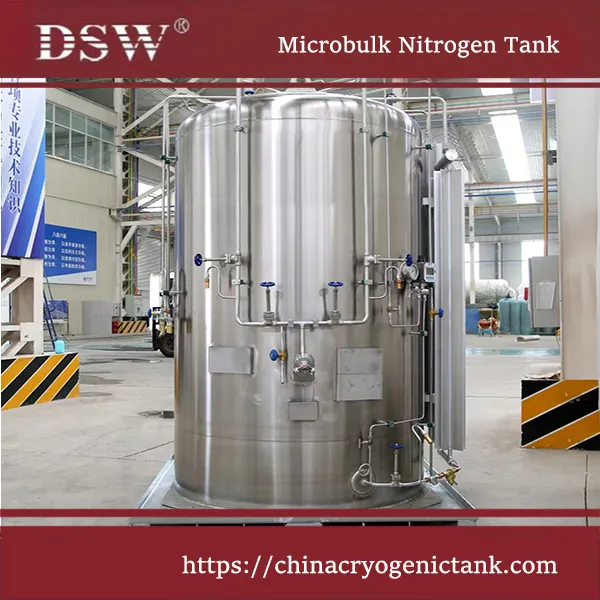
2.2 Microbulk Cryogenic Tanks
Microbulk tanks are compact storage systems positioned between traditional gas cylinder supply and conventional large-capacity bulk storage.
They are designed for facilities that consume industrial gases regularly but do not require the storage volume of a large stationary installation.
A typical microbulk system may include:
- A vacuum-insulated storage vessel.
- Liquid filling and withdrawal connections.
- Pressure-building equipment.
- Pressure regulation and safety devices.
- Level and pressure monitoring instruments.
Microbulk systems can provide a more convenient supply arrangement for smaller manufacturing facilities by reducing dependence on frequent individual cylinder changes.
Typical applications include metal fabrication, laser cutting, food processing, laboratories and selected pharmaceutical operations.
The appropriate capacity should be determined from actual consumption data and replenishment requirements rather than assuming a universal microbulk capacity range.
2.3 Stationary Bulk Cryogenic Storage Tanks
Stationary bulk cryogenic tanks are designed for industrial facilities requiring relatively large quantities of liquefied gases and a consistent supply to downstream processes.
These systems are generally installed on engineered foundations and connected to vaporizers, pressure-control equipment and gas distribution pipelines.
Their configurations may include vertical or horizontal vessels, depending on storage capacity, site conditions and engineering requirements.
Typical system components include:
- Inner pressure vessel.
- Outer protective jacket.
- Vacuum insulation system.
- Pressure-building circuit.
- Liquid filling and withdrawal connections.
- Pressure relief and safety devices.
- Level and pressure instrumentation.
- External vaporizer and gas distribution equipment, where required.
Stationary bulk tanks are commonly used in steel production, chemical manufacturing, hospitals, electronics production and industrial gas distribution facilities.
For high-consumption applications, the storage system must be designed around peak demand, replenishment intervals, reserve inventory and required gas delivery conditions.
3. Cryogenic Tanks by Installation Orientation
Vertical and horizontal configurations are two widely used arrangements for stationary cryogenic storage vessels. The choice between them is primarily determined by installation conditions, structural design, available space and operational requirements.
3.1 Vertical Cryogenic Storage Tanks
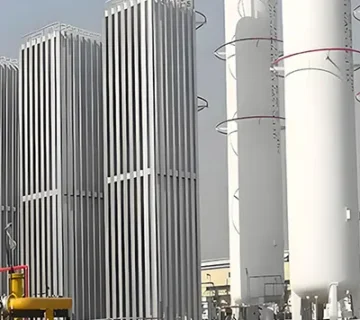
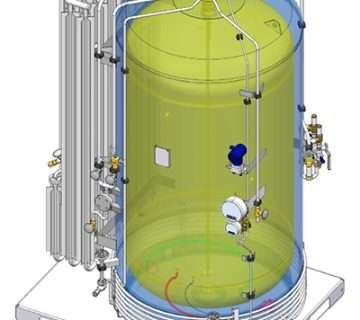
Vertical cryogenic tanks feature an upright cylindrical inner vessel housed within an outer jacket. They are widely used in industrial facilities where available ground space is limited.
Their relatively small footprint makes them suitable for installations requiring substantial storage capacity within a restricted site area.
Main design characteristics:
- Upright cylindrical vessel arrangement.
- Double-wall construction in typical vacuum-insulated designs.
- Structural support designed for the vessel’s operating loads.
- Insulated annular space to reduce heat transfer.
- Configurable liquid filling, withdrawal and pressure-control systems.
Typical applications:
Vertical tanks are commonly used for liquid nitrogen, liquid oxygen and liquid argon storage at industrial manufacturing facilities, hospitals, chemical plants and gas supply stations.
The engineering design must account for foundation loading, vessel height, wind loads, seismic requirements where applicable, filling access and maintenance clearance.
3.2 Horizontal Cryogenic Storage Tanks
Horizontal cryogenic tanks have a cylindrical vessel arranged parallel to the ground and supported by engineered saddles or other suitable structural arrangements.
They are particularly useful where installation height is restricted or where the site layout favors a horizontal equipment configuration.
Main design characteristics:
- Horizontal cylindrical vessel arrangement.
- Structural saddles and supporting foundations.
- Double-wall vacuum-insulated construction in typical industrial designs.
- Configurable liquid and gas connections.
- Installation requirements tailored to vessel dimensions and operating loads.
Typical applications:
Horizontal tanks are used in industrial liquid gas storage, selected LNG installations and specialized cryogenic supply systems.
When comparing vertical and horizontal configurations, engineers should consider the available installation area, total vessel dimensions, foundation requirements, piping arrangements, filling access and maintenance conditions.
Vertical vs. Horizontal Cryogenic Tanks
| Engineering Consideration | Vertical Tank | Horizontal Tank |
|---|---|---|
| Installation arrangement | Upright | Parallel to ground |
| Ground footprint | Generally smaller | Generally larger |
| Installation height | Requires greater vertical clearance | Requires less vertical clearance |
| Structural support | Base or engineered support structure | Saddles or engineered supports |
| Site suitability | Restricted ground area | Restricted installation height |
| Maintenance access | Depends on vessel height and layout | Depends on vessel length and access arrangement |
Neither configuration is universally superior. The appropriate design depends on project-specific installation and operating conditions.
4. Cryogenic Tanks for Transportation
Unlike stationary storage vessels, transportable cryogenic tanks must accommodate transportation loads, mounting arrangements, road or intermodal requirements and the relevant regulatory framework.
Three important transportation configurations are used in industrial cryogenic liquid distribution.
4.1 Cryogenic ISO Tank Containers
Cryogenic ISO tank containers are specialized transport vessels integrated into standardized container frames.
They are designed for intermodal transportation, allowing compatible liquefied products to move between road, rail and maritime transport networks.
Their main design elements include:
- Insulated cryogenic storage vessel.
- Structural container frame.
- Transportation securing arrangements.
- Liquid filling and discharge connections.
- Pressure relief and monitoring equipment.
ISO tank containers are used in international and regional cryogenic liquid logistics, subject to the specific tank design and applicable transportation approvals.
4.2 Cryogenic Tank Semi-Trailers
Cryogenic tank semi-trailers consist of an insulated liquid storage vessel mounted on a trailer chassis designed to be pulled by a tractor unit.
They are commonly used to transport bulk liquid nitrogen, liquid oxygen, liquid argon and other compatible industrial cryogenic products.
Their engineering requirements include:
- Trailer chassis and structural supports.
- Cryogenic storage vessel.
- Road transportation braking systems.
- Pressure relief and safety devices.
- Liquid transfer and discharge arrangements.
- Vehicle-specific operating and inspection requirements.
These vehicles are widely used by industrial gas suppliers for regional bulk liquid deliveries.
4.3 Cryogenic Road Tankers
Cryogenic road tankers are vehicle-based transportation systems designed for delivering liquefied gases.
Depending on the vehicle configuration, the storage vessel may be mounted directly on a rigid truck chassis or incorporated into a specialized road transportation arrangement.
It is important to distinguish between a rigid tanker truck and a semi-trailer. A semi-trailer is an independent trailer unit connected to a tractor, whereas a rigid tanker truck carries its tank on the vehicle chassis.
The selection of a transportation system depends on payload requirements, route conditions, loading and unloading infrastructure, vehicle regulations and the properties of the transported liquid.
For more information, see our guide to cryogenic semi-trailer configurations.
5. Cryogenic Tanks by Insulation Technology
Insulation performance is a fundamental aspect of cryogenic tank design. Heat entering a storage vessel can cause liquid evaporation, changes in internal pressure and increased product losses.
5.1 Vacuum-Insulated Cryogenic Tanks
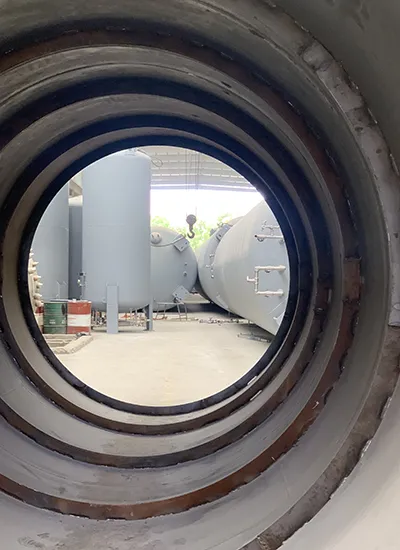
Vacuum-insulated cryogenic tanks generally use a double-wall construction consisting of an inner storage vessel and an external protective jacket.
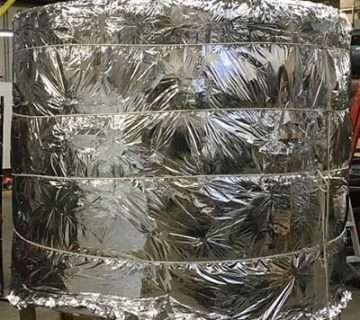
The space between the two vessels is evacuated to reduce heat transfer through the annular space. Depending on the design, multilayer insulation or other suitable insulating materials may also be incorporated.
Important engineering considerations include:
- Vacuum integrity.
- Insulation material and configuration.
- Thermal bridging through structural supports.
- Heat ingress through piping and connections.
- Expected holding time and evaporation characteristics.
Vacuum-insulated construction is widely used for industrial cryogenic storage and transportation equipment.
5.2 Other Insulated Cryogenic Vessels
Some specialized cryogenic storage systems use alternative insulation arrangements, including perlite-based insulation and other engineered thermal protection systems.
The choice of insulation depends on the operating temperature, vessel dimensions, thermal performance requirements, installation environment and intended service.
Insulation selection should therefore be evaluated as part of the overall vessel design rather than treated as an independent product feature.
6. Cryogenic Tanks by Stored Medium
Cryogenic tanks must be engineered for the specific liquid they are intended to store. Different gases have different physical properties, operating conditions, material compatibility requirements and safety considerations.
| Tank Application | Stored Medium | Typical Industrial Uses |
|---|---|---|
| Liquid Nitrogen Storage Tank | LN₂ | Metal processing, food freezing, electronics and laboratories |
| Liquid Oxygen Storage Tank | LOX | Steelmaking, healthcare and chemical processing |
| Liquid Argon Storage Tank | LAr | Welding, metallurgy and industrial gas supply |
| LNG Storage Tank | LNG | Energy infrastructure, industrial fuel and gas distribution |
| Liquid CO₂ Storage Tank | LCO₂ | Food and beverage processing and industrial applications |
Liquid carbon dioxide is often stored in refrigerated, pressurized vessels and should be distinguished from the conventional atmospheric-temperature cryogenic liquids. Its storage conditions and phase behavior require specific engineering consideration.
Oxygen service also requires particular attention to oxygen-compatible materials, cleaning procedures and contamination control. LNG installations require dedicated consideration of flammability, material suitability and applicable safety requirements.
A vessel designed for one stored medium should not be assumed suitable for another without an appropriate engineering assessment.
7. Engineering Factors That Determine Cryogenic Tank Design
Although cryogenic tanks are classified into several major types, their final engineering configuration depends on the operating conditions and project requirements.
Storage Capacity
The required usable liquid volume should be calculated from consumption demand, delivery intervals, reserve requirements and the expected operating schedule.
Operating and Design Pressure
The normal operating pressure and maximum allowable working pressure must be established according to the process requirements and applicable pressure vessel design code.
Material Selection
Inner vessel materials must provide suitable mechanical properties and toughness at the intended operating temperature. External structures and jackets require appropriate strength, corrosion protection and environmental durability.
Thermal Performance
Insulation design must account for heat ingress, expected liquid holding time, evaporation behavior, thermal bridges and the performance of associated piping systems.
Structural and Installation Conditions
Foundation loads, wind loads, seismic requirements, supporting structures, site access and maintenance clearances must be considered during equipment specification.
Filling and Withdrawal Requirements
The filling arrangement, liquid withdrawal rate, vaporization capacity, pressure-building system and downstream pipeline conditions should be evaluated together.
Applicable Standards and Inspection
Design, fabrication, testing, inspection and transportation requirements must comply with the standards and regulations applicable to the specific equipment and destination market. Depending on the project, relevant standards may include ASME Section VIII, EN 13458, ISO 21009 and applicable national pressure vessel and transportation regulations. The applicable editions and scope must be confirmed for each project.
8. How to Select the Appropriate Cryogenic Tank Type
Selecting a cryogenic tank requires a coordinated assessment of storage demand, operating conditions, installation requirements and supply logistics.
| Project Requirement | Configuration to Evaluate |
|---|---|
| Small quantities for laboratory use | Cryogenic Dewar |
| Regular supply for moderate consumption | Microbulk Tank |
| High-volume permanent industrial storage | Stationary Bulk Tank |
| Limited ground installation space | Vertical Tank |
| Limited installation height | Horizontal Tank |
| International intermodal transportation | Cryogenic ISO Tank Container |
| Regional bulk liquid delivery | Cryogenic Tank Semi-Trailer |
| Vehicle-based liquid gas delivery | Cryogenic Road Tanker |
The final selection should also consider the stored gas, required operating pressure, liquid withdrawal capacity, vaporizer requirements, site conditions and applicable engineering standards.
For industrial projects, a tank should be specified as part of the complete storage and gas supply system rather than selected solely by its nominal volume.
Selecting the right cryogenic tank configuration!
Whether your project requires vertical or horizontal storage vessels, bulk liquid storage, microbulk systems or specialized transportation equipment
Cryogenic Tanks FAQs
About Cryogenic Tank Types
The main configurations include cryogenic dewars, microbulk tanks, stationary bulk tanks, vertical and horizontal storage vessels, and specialized transport tanks. Each configuration serves different storage, installation and distribution requirements.
A vertical cryogenic tank has an upright cylindrical arrangement and generally requires less ground space. A horizontal tank is installed parallel to the ground and may be more suitable where vertical clearance is limited. Both configurations can be designed for stationary industrial storage.
Microbulk systems are intended for relatively moderate industrial gas consumption, while bulk tanks are designed for larger storage volumes and higher supply demand. The appropriate capacity depends on actual consumption, delivery schedules and operating requirements.
No. Vacuum insulation is widely used in industrial cryogenic vessels, but other insulation arrangements are also used in specialized applications. The appropriate construction depends on the stored medium, operating conditions and thermal performance requirements.
Not automatically. The vessel must be designed and assessed for the specific stored medium, including temperature, pressure, material compatibility, cleanliness and safety requirements. Changing the stored medium requires appropriate engineering and regulatory review.
The main information includes the stored medium, required capacity, normal operating pressure, design pressure, liquid withdrawal rate, installation conditions, supply requirements and applicable standards. These parameters allow engineers to evaluate the appropriate vessel configuration and associated equipment.

No comment