
Industrial gases are essential materials used across manufacturing, chemical processing, metal fabrication, healthcare, food production, electronics, energy and scientific research. They support a wide range of industrial operations, from combustion and welding to cooling, chemical reactions, inerting and product preservation.
Common industrial gases include oxygen, nitrogen, argon, carbon dioxide, hydrogen, helium, acetylene and various specialty gases. Each gas has distinct physical and chemical properties that determine its applications, purity requirements, storage conditions and supply methods.
Understanding the different types of industrial gases helps businesses select suitable industrial gas products, establish appropriate supply systems and meet specific process requirements. This guide explains the main categories of industrial gases, their properties, common applications and typical supply forms.
1. What Are Industrial Gases?
Industrial gases are gases manufactured, separated, purified, blended or processed for commercial and industrial applications. They may be supplied as compressed gases, liquefied gases, dissolved gases or specialty gas mixtures, depending on their physical properties and intended use.
Some industrial gases are extracted from atmospheric air through separation processes, while others are produced through chemical reactions, hydrocarbon processing, electrolysis or other industrial manufacturing methods.
Industrial gases serve several important functions:
- Combustion and oxidation: Oxygen supports combustion and oxidation processes in metal production and other industrial operations.
- Inerting and blanketing: Nitrogen and argon help create controlled atmospheres that reduce unwanted oxidation or reactions.
- Welding and metal fabrication: Argon, carbon dioxide, oxygen and acetylene are used in different welding and cutting processes.
- Cooling and refrigeration: Nitrogen, carbon dioxide and other gases are used in industrial cooling and temperature-control applications.
- Chemical manufacturing: Hydrogen, ethylene, ammonia and other gases serve as feedstocks or process materials.
- Electronics and precision manufacturing: High-purity gases support semiconductor fabrication, analytical processes and specialized production environments.
The selection of an industrial gas depends on its chemical properties, required purity, operating conditions, consumption volume and delivery method.
2. Main Types of Industrial Gases and Their Uses
Industrial gases can be divided into several groups according to their chemical properties and industrial functions. The following gases are among the most widely used in manufacturing and industrial supply chains.
2.1 Oxygen (O₂)
Oxygen is a colorless, odorless and reactive gas that supports combustion. It is one of the most important industrial gases because of its role in metal processing, chemical manufacturing, water treatment and healthcare.
Industrial oxygen is commonly produced through cryogenic air separation, although other production methods are used for specific applications and capacity requirements.
Common industrial applications:
- Steelmaking: Oxygen is used in basic oxygen steelmaking to remove impurities and reduce carbon content in molten iron.
- Metal cutting and welding: Oxygen supports oxy-fuel cutting and other thermal processing operations.
- Chemical manufacturing: Oxygen is used in oxidation reactions and various chemical production processes.
- Wastewater treatment: Oxygen can support biological treatment and industrial water purification processes.
- Healthcare: Medical oxygen is used for respiratory support under applicable medical standards.
Oxygen is supplied in compressed gas cylinders, liquid oxygen containers and bulk cryogenic storage tanks. The appropriate supply configuration depends on consumption volume, purity requirements and site infrastructure.
Related product category: Explore industrial gas products.
2.2 Nitrogen (N₂)
Nitrogen is a colorless, odorless and relatively inert gas under ordinary conditions. It makes up approximately 78% of the Earth’s atmosphere and is widely used wherever an oxygen-reduced or controlled atmosphere is required.
Industrial nitrogen is primarily produced through air separation, pressure swing adsorption (PSA) or membrane separation, depending on the required purity and production capacity.
Common industrial applications:
- Food packaging: Nitrogen is used for modified atmosphere packaging to help protect products from oxidation.
- Electronics manufacturing: Nitrogen provides controlled atmospheres during soldering and other manufacturing processes.
- Chemical processing: Nitrogen is used for purging, blanketing and inerting equipment and pipelines.
- Metal processing: Nitrogen is used in selected heat treatment, cutting and protective atmosphere applications.
- Oil and gas: Nitrogen is used for pipeline purging, pressure testing and other specialized operations.
- Industrial cooling: Liquid nitrogen is used for rapid cooling, freezing and low-temperature processing.
Nitrogen is available as compressed gas and liquid nitrogen. Large-volume users may use on-site nitrogen generators or bulk liquid nitrogen storage and vaporization systems.
2.3 Argon (Ar)
Argon is a noble gas that is colorless, odorless, nonflammable and chemically inert under normal conditions. Its stable properties make it suitable for applications requiring protection from atmospheric oxygen and nitrogen.
Commercial argon is generally recovered during the cryogenic separation of air, often as a by-product of oxygen and nitrogen production.
Common industrial applications:
- Gas tungsten arc welding (TIG): Argon provides shielding around the welding arc and molten metal.
- Gas metal arc welding (MIG): Argon and argon-based mixtures are used for different metal welding applications.
- Metal production: Argon provides protective atmospheres in selected steelmaking and metallurgy processes.
- Electronics manufacturing: Argon is used in controlled atmospheres and specialized manufacturing processes.
- Scientific applications: High-purity argon is used in analytical instruments and laboratory equipment.
Argon is supplied in high-pressure cylinders, liquid argon dewars and bulk liquid storage tanks. Supply options depend on gas consumption and the requirements of the welding or manufacturing operation.
2.4 Carbon Dioxide (CO₂)
Carbon dioxide is a colorless, nonflammable gas that is widely used in food processing, chemical manufacturing, welding, fire protection and water treatment.
Industrial carbon dioxide can be recovered from different industrial processes, including fermentation, ammonia production, hydrogen production and other chemical operations. It is then purified and processed to meet the intended application requirements.
Common industrial applications:
- Food and beverage production: Carbon dioxide is used in beverage carbonation, food packaging and processing.
- Welding: CO₂ is used as a shielding gas or as a component of mixed shielding gases in certain welding processes.
- Fire protection: Carbon dioxide is used in selected fire suppression systems.
- Water treatment: CO₂ can be used for pH adjustment and water conditioning.
- Industrial cooling: Solid carbon dioxide, commonly known as dry ice, is used for cooling and temperature-controlled transportation.
Carbon dioxide is commonly supplied as compressed gas or refrigerated liquid. Unlike typical atmospheric-pressure cryogenic liquids such as liquid nitrogen, liquid CO₂ is normally stored under pressure at conditions that maintain it in the liquid phase.
Storage and handling requirements must therefore account for its pressure-temperature relationship and the properties of the intended CO₂ system.
2.5 Hydrogen (H₂)
Hydrogen is the lightest chemical element and a highly flammable gas. It is an important industrial feedstock and energy carrier, with applications in refining, chemical manufacturing, metallurgy and emerging energy technologies.
Hydrogen can be produced through several processes, including natural gas reforming, coal gasification and water electrolysis. Its production route affects the overall environmental characteristics and cost of the supplied hydrogen.
Common industrial applications:
- Petroleum refining: Hydrogen is used in hydrocracking and hydrotreating processes.
- Ammonia production: Hydrogen reacts with nitrogen to produce ammonia.
- Methanol production: Hydrogen is used as a feedstock in methanol synthesis.
- Metal processing: Hydrogen is used in selected reducing atmospheres and heat treatment processes.
- Energy applications: Hydrogen can be used in fuel cells and other energy systems.
Hydrogen is commonly supplied as compressed gas. Large-scale applications may also use specialized liquid hydrogen storage and transportation systems. Its low density, flammability and material compatibility requirements make proper system design particularly important.
2.6 Helium (He)
Helium is a colorless, odorless, nonflammable noble gas with a very low boiling point. It has high thermal conductivity, low density and excellent chemical stability.
Commercial helium is primarily recovered from selected natural gas resources and purified to meet different industrial and scientific specifications.
Common industrial applications:
- Leak detection: Helium is used to identify leaks in vacuum systems, pipelines and sealed components.
- Medical imaging: Liquid helium is used as a coolant for superconducting magnets in many MRI systems.
- Electronics manufacturing: Helium is used in selected semiconductor and precision manufacturing processes.
- Welding: Helium and helium-based mixtures are used as shielding gases for certain welding applications.
- Scientific research: Helium is used in cryogenic research and laboratory applications.
Helium is generally supplied in high-pressure gas cylinders, tube trailers or specialized liquid helium containers, depending on consumption volume and application requirements.
2.7 Acetylene (C₂H₂)
Acetylene is a highly flammable hydrocarbon gas widely used in oxy-acetylene welding, metal cutting and specialized chemical manufacturing.
It is commonly produced through the reaction of calcium carbide with water, although other production routes are also used in industrial applications.
Common industrial applications:
- Oxy-acetylene welding: Acetylene provides a high-temperature flame when burned with oxygen.
- Metal cutting: It is used in oxy-fuel cutting operations.
- Metal heating: Acetylene is used for localized heating and brazing applications.
- Chemical manufacturing: It serves as a feedstock for certain chemical synthesis processes.
Acetylene is normally supplied in specially designed cylinders containing a porous mass and solvent. It requires specific cylinder construction and handling procedures because of its instability under certain pressure and temperature conditions.
2.8 Ethylene (C₂H₄)
Ethylene, also known as ethene, is an important petrochemical feedstock and one of the most widely produced organic chemicals. It is a colorless, flammable hydrocarbon gas used extensively in plastics and chemical manufacturing.
Most industrial ethylene is produced through steam cracking of hydrocarbon feedstocks, such as ethane and naphtha.
Common industrial applications:
- Polyethylene manufacturing: Ethylene is the primary feedstock for producing polyethylene plastics.
- Ethylene oxide production: It is used to manufacture ethylene oxide, an important chemical intermediate.
- Ethylene glycol production: Ethylene-derived intermediates are used in the production of ethylene glycol.
- Agriculture: Ethylene is used in controlled fruit ripening and postharvest management.
- Chemical synthesis: Ethylene is a feedstock for numerous petrochemical products.
Ethylene is supplied through industrial gas cylinders, specialized pressure vessels or refrigerated liquid storage systems, depending on the scale and supply arrangement. Storage conditions must be matched to its flammability and physical properties.
2.9 Methane (CH₄)
Methane is the primary component of natural gas and an important fuel and chemical feedstock. It is a colorless, highly flammable hydrocarbon gas used in industrial heating, power generation and chemical manufacturing.
Industrial methane is commonly obtained from natural gas processing, although it can also be produced through biogas upgrading and other processes.
Common industrial applications:
- Industrial heating: Methane is used as a fuel in furnaces, boilers and industrial burners.
- Hydrogen production: Natural gas reforming uses methane as a primary feedstock.
- Methanol manufacturing: Methane-derived synthesis gas can be used in methanol production.
- Power generation: Natural gas is used in gas turbines and other electricity generation systems.
- Chemical manufacturing: Methane is a starting material for various chemical processes.
Methane may be supplied as compressed natural gas (CNG) or liquefied natural gas (LNG), depending on the composition, application and distribution infrastructure. LNG is stored at cryogenic temperatures in specially designed insulated vessels.
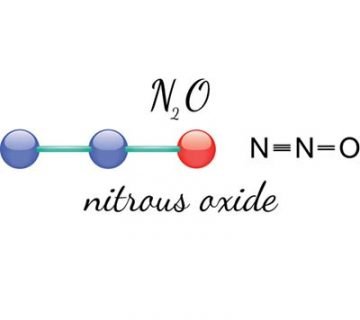
2.10 Nitrous Oxide (N₂O)
Nitrous oxide, also known as laughing gas, is a colorless gas with a slightly sweet odor. It has applications in medical, food processing and selected industrial processes. It also supports combustion and must not be treated as an inert gas.
Industrial nitrous oxide is produced through controlled chemical manufacturing processes and purified according to its intended application.
Common industrial applications:
- Medical applications: Medical-grade nitrous oxide is used as an anesthetic and analgesic under appropriate medical controls.
- Food processing: Food-grade nitrous oxide is used as a propellant in certain food dispensing systems.
- Electronics manufacturing: High-purity nitrous oxide is used in selected semiconductor processing applications.
- Chemical applications: It is used in specialized oxidation and chemical processes.
Nitrous oxide is generally supplied as a liquefied compressed gas in suitable pressure cylinders or bulk systems. Product purity and cylinder specifications must match the intended application.
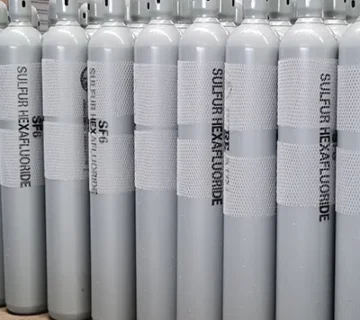
2.11 Sulfur Hexafluoride (SF₆)
Sulfur hexafluoride is a colorless, odorless, nonflammable synthetic gas with excellent electrical insulating properties. It has traditionally been used in high-voltage electrical equipment and selected industrial applications.
Common industrial applications:
- Electrical insulation: SF₆ has been used as an insulating and arc-quenching medium in gas-insulated switchgear and circuit breakers.
- Electronics manufacturing: It is used in selected plasma etching and semiconductor processes.
- Specialized industrial processes: It is used in certain controlled-atmosphere applications.
SF₆ is typically supplied in high-pressure cylinders. Because it is an extremely potent greenhouse gas, leakage prevention, recovery, recycling and responsible handling are important considerations. Alternative insulating technologies are increasingly used in some electrical applications.
2.12 Specialty Gas Mixtures
Specialty gas mixtures are carefully prepared combinations of two or more gases with specified concentrations and tolerances. They are manufactured to meet the requirements of analytical instruments, laboratory testing, electronics production, environmental monitoring and industrial process control.
Common examples include:
- Calibration gas mixtures: Used to calibrate gas detectors, analyzers and monitoring instruments.
- Welding gas mixtures: Argon, carbon dioxide and other gases are blended for specific welding processes.
- Electronic gas mixtures: High-purity mixtures are used in selected semiconductor manufacturing processes.
- Environmental monitoring mixtures: Certified gas standards support emissions testing and air-quality analysis.
- Medical and laboratory mixtures: Prepared according to specific technical and regulatory requirements.
Specialty gas mixtures require accurate blending, suitable cylinder preparation, traceable analytical testing and appropriate certification. Their specifications are determined by the target application rather than simply by the individual gases in the mixture.
3. How Industrial Gases Are Classified
Industrial gases can be classified in different ways, depending on their chemical characteristics, physical state, industrial function and intended application. Understanding these classifications helps users evaluate gas properties and select appropriate supply and storage systems.
3.1 Classification by Chemical Properties
| Gas Group | Examples | Main Characteristics |
|---|---|---|
| Oxidizing gases | Oxygen, Nitrous Oxide | Support or intensify combustion and oxidation. |
| Inert gases | Nitrogen, Argon, Helium | Generally have low chemical reactivity under ordinary conditions. |
| Flammable gases | Hydrogen, Methane, Acetylene, Ethylene | Can ignite or burn when mixed with suitable oxidizers. |
| Asphyxiant gases | Nitrogen, Argon, Helium | Can displace oxygen and create an oxygen-deficient atmosphere. |
| Specialty gases | SF₆, high-purity gases and certified mixtures | Supplied to specific purity, composition and analytical requirements. |
These classifications are not mutually exclusive. A gas may belong to more than one safety or functional category. For example, oxygen is an oxidizing gas, while nitrogen is both an inert gas and a potential asphyxiant.
3.2 Classification by Physical State and Supply Conditions
Industrial gases can also be classified according to their physical state during storage and delivery.
- Compressed gases: Stored in high-pressure cylinders or other pressure vessels. Examples include oxygen, nitrogen, argon and hydrogen.
- Liquefied gases: Stored as liquids under suitable pressure and temperature conditions. Examples include liquid nitrogen, liquid oxygen, liquid argon and liquid carbon dioxide.
- Refrigerated liquefied gases: Maintained at low temperatures in insulated storage vessels. LNG and liquid nitrogen are common examples.
- Dissolved gases: Acetylene is commonly stored dissolved in a solvent inside specially designed cylinders.
- Gas mixtures: Two or more gases are blended to specified concentrations and supplied in suitable cylinders or containers.
Not all liquefied gases are stored under the same conditions. For example, liquid nitrogen is maintained at cryogenic temperatures near its atmospheric boiling point, while liquid CO₂ is generally stored under pressure at substantially higher temperatures. Storage equipment must therefore be designed for the specific gas and operating conditions.
For applications involving refrigerated liquefied gases, the selection of suitable cryogenic storage solutions is essential for maintaining the required operating conditions and supporting reliable gas supply.
4. Industrial Gas Supply and Storage Forms
The appropriate supply method depends on gas consumption, delivery distance, required pressure, storage conditions, purity specifications and the operating requirements of the facility.
4.1 High-Pressure Gas Cylinders
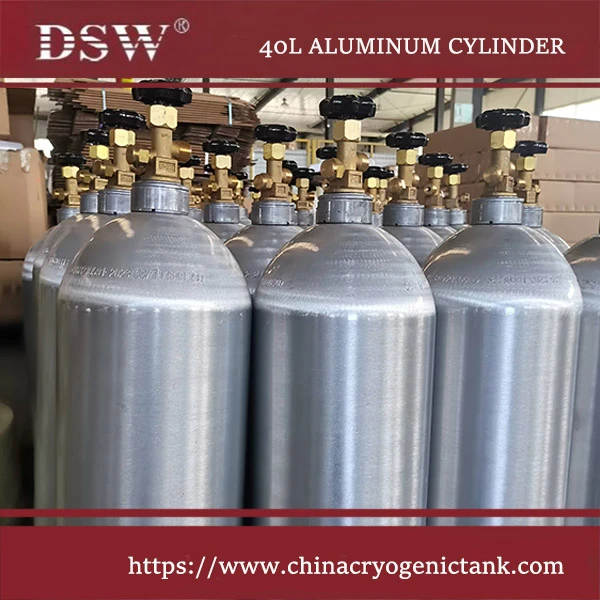
High-pressure gas cylinders are widely used for small and medium-volume industrial gas consumption. They are available in different capacities and pressure ratings according to the gas type, applicable standards and intended application.
Common cylinder gases include oxygen, nitrogen, argon, hydrogen, helium, acetylene and specialty gas mixtures.
Cylinder supply is suitable for laboratories, welding workshops, manufacturing facilities, maintenance operations and locations without centralized gas distribution infrastructure.
4.2 Liquid Gas Dewars and Cryogenic Containers
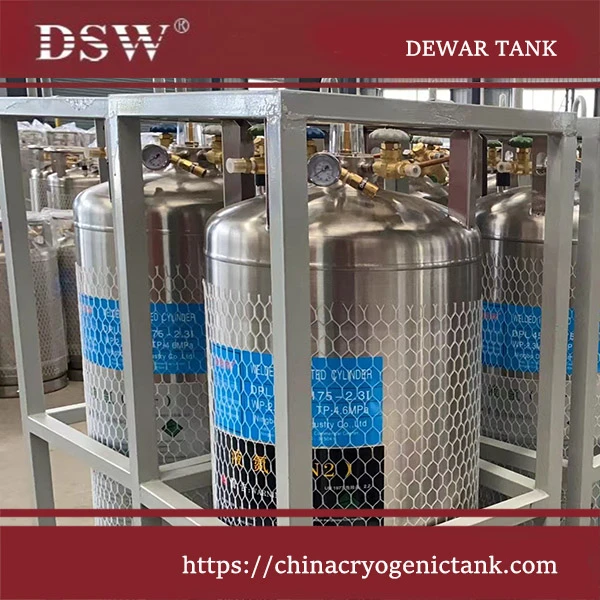
Cryogenic dewars and portable liquid gas containers are designed to store and transport certain liquefied gases at very low temperatures. They typically use insulated vessel construction to reduce heat transfer and limit product evaporation.
Common applications include liquid nitrogen, liquid argon and liquid oxygen supply for industrial, scientific and specialized applications. Container design and permitted service conditions must match the particular liquid gas.
4.3 Bulk Cryogenic Storage Tanks
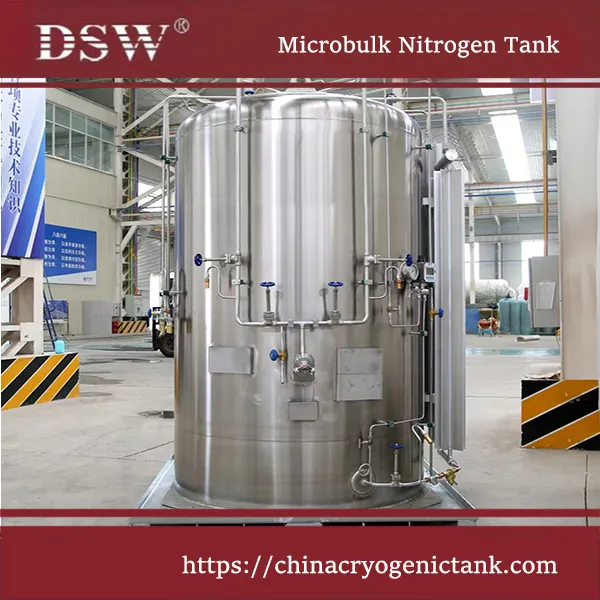
Bulk cryogenic storage tanks are used by industrial facilities that require relatively large and continuous supplies of liquefied gases. These tanks generally feature a double-wall construction with an inner vessel, an outer protective jacket and an insulating space between them.
Typical stored products include liquid nitrogen, liquid oxygen and liquid argon. Larger installations may include pressure-building systems, vaporizers, filling connections, instrumentation and gas distribution equipment.
Explore our range of cryogenic storage tanks for liquid nitrogen, liquid oxygen and liquid argon storage applications.
Bulk storage is suitable for steel plants, chemical facilities, electronics manufacturers, hospitals and other high-consumption users.
4.4 Microbulk Gas Supply Systems
Microbulk systems provide an intermediate supply option between individual cylinders and large bulk storage installations. They generally use compact insulated liquid storage tanks combined with filling, pressure-control and gas distribution equipment.
They are particularly useful for facilities with moderate gas consumption that require a more centralized and consistent supply than individual cylinder handling can provide.
4.5 On-Site Gas Generation
On-site gas generation systems produce selected industrial gases directly at the point of use. Depending on the technology, these systems can reduce dependence on delivered gas and provide greater control over production capacity and supply scheduling.
Common examples include:
- PSA nitrogen generators: Separate nitrogen from compressed air using adsorption technology.
- Membrane nitrogen generators: Separate nitrogen from other air components through selective membrane permeation.
- Oxygen generators: Use technologies such as pressure swing adsorption to produce oxygen-enriched gas.
- Industrial hydrogen generation: Uses processes such as water electrolysis or natural gas reforming.
On-site generation is not suitable for every gas or purity requirement. The decision depends on production demand, operating costs, equipment investment and technical specifications.

5. How to Choose the Right Industrial Gas
Selecting an industrial gas involves more than identifying the required chemical substance. Businesses must also consider the application, purity, consumption rate, delivery conditions and compatibility with the equipment.
5.1 Define the Application
Start by identifying the intended industrial process. Welding, heat treatment, chemical production, food packaging and semiconductor manufacturing have different gas requirements. The gas must be suitable for the process and its operating conditions.
5.2 Determine the Required Purity
Industrial gases are available in different purity grades. General manufacturing may use standard industrial grades, while electronics, laboratory and specialized chemical processes may require higher purity levels.
Specifications should identify the required gas concentration and relevant impurity limits, such as moisture, oxygen, hydrocarbons or other contaminants.
5.3 Evaluate Consumption and Supply Volume
Estimate average and peak gas consumption. Low-volume users may benefit from cylinder supply, while larger facilities may require liquid gas containers, microbulk systems, bulk storage tanks or on-site generation.
5.4 Consider Storage and Delivery Conditions
Different gases require different storage conditions. Some are stored in high-pressure cylinders, others as refrigerated liquids, and certain gases require specialized vessels or cylinder designs.
Storage equipment must be compatible with the gas’s chemical properties, pressure, temperature and applicable regulatory requirements.
5.5 Review Quality and Safety Requirements
Verify the supplier’s quality documentation, product specifications, applicable certifications and traceability arrangements. The facility should also establish suitable ventilation, gas detection, handling procedures and emergency controls based on the hazards of each gas.
For larger industrial installations, engineering review of storage capacity, vaporization requirements, pressure regulation and distribution infrastructure is also important.
Explore Industrial Gas Products
Looking for industrial gases for manufacturing or processing? Explore our gas products and find suitable supply options for your needs.
6. Industrial Gases and Their Applications: Quick Comparison
The following table summarizes common industrial gases and their principal applications.
| Industrial Gas | Main Characteristics | Typical Applications |
|---|---|---|
| Oxygen (O₂) | Oxidizing gas | Steelmaking, cutting, chemical processing |
| Nitrogen (N₂) | Relatively inert gas | Inerting, food packaging, cooling |
| Argon (Ar) | Noble gas | Welding, metallurgy, electronics |
| Carbon Dioxide (CO₂) | Nonflammable gas | Food processing, welding, cooling |
| Hydrogen (H₂) | Highly flammable gas | Refining, ammonia, chemical production |
| Helium (He) | Light, inert noble gas | Leak detection, MRI, cryogenics |
| Acetylene (C₂H₂) | Highly flammable gas | Welding, cutting, chemical synthesis |
| Ethylene (C₂H₄) | Flammable hydrocarbon | Petrochemicals, plastics, fruit ripening |
| Methane (CH₄) | Flammable hydrocarbon | Fuel, hydrogen and chemical production |
| Nitrous Oxide (N₂O) | Oxidizing gas | Medical, food and electronics applications |
| Sulfur Hexafluoride (SF₆) | Electrically insulating gas | Electrical equipment, semiconductor processes |
7. Industrial Gas Safety and Handling Considerations
Industrial gases have different hazards depending on their chemical properties and physical conditions. Correct storage, transportation and handling practices are essential for protecting workers, equipment and surrounding facilities.
Important considerations include:
- Pressure hazards: Compressed gas cylinders and storage vessels must be designed, inspected and operated within their approved pressure limits.
- Flammability: Hydrogen, methane, acetylene and ethylene require appropriate ignition control and gas-specific safety measures.
- Oxidizing properties: Oxygen and nitrous oxide can intensify combustion and require compatible materials and clean equipment.
- Oxygen displacement: Nitrogen, argon, helium and other gases can create oxygen-deficient atmospheres, particularly in enclosed spaces.
- Low-temperature hazards: Cryogenic liquids can cause severe cold burns and material embrittlement if handled improperly.
- Environmental considerations: Certain gases, including SF₆, require careful leak prevention and recovery because of their environmental impact.
Industrial gas users should follow applicable pressure vessel standards, cylinder regulations, transportation requirements, safety data sheets and site-specific operating procedures. Gas storage and distribution systems should be designed and maintained by qualified professionals.
8. Conclusion
Industrial gases support a broad range of manufacturing, processing and scientific activities. Oxygen, nitrogen, argon, carbon dioxide, hydrogen, helium, acetylene, ethylene, methane, nitrous oxide and specialty gas mixtures each serve different functions based on their physical and chemical properties.
Choosing the right industrial gas requires consideration of the application, purity grade, consumption volume, storage conditions and delivery method. Equally important is selecting compatible cylinders, cryogenic containers, bulk storage tanks or on-site generation systems to maintain a reliable gas supply.
Understanding these gas types and their applications provides a foundation for evaluating industrial gas products and developing suitable storage and supply solutions.
TECHNICAL FAQs
About Industrial Gases
Common industrial gases include oxygen, nitrogen, argon, carbon dioxide, hydrogen, helium, acetylene, ethylene, methane and nitrous oxide. Specialty gases and certified gas mixtures are also used in electronics, laboratories and other specialized applications.
Industrial gases are used in welding, metal processing, chemical manufacturing, food packaging, electronics production, healthcare, cooling, inerting and power generation. The specific application depends on the chemical and physical properties of each gas.
Industrial gases generally refer to gases supplied for manufacturing, processing and other commercial applications. Specialty gases are defined by specific purity, composition, analytical accuracy or application requirements. The two categories overlap because some industrial gases are also supplied in specialty-grade specifications.
Industrial gases can be supplied in high-pressure cylinders, liquid gas containers, cryogenic dewars, bulk storage tanks, tube trailers or through on-site generation systems. The appropriate method depends on consumption volume, gas properties and operating requirements.
Common industrial cryogenic liquids include liquid nitrogen, liquid oxygen and liquid argon. LNG and liquid helium also require specialized low-temperature storage systems. The storage design must be suitable for the specific gas, temperature, pressure and applicable standards.
No. Some industrial gases are stored as compressed gases, while others are stored as refrigerated liquids, liquefied gases under pressure or dissolved gases. Storage conditions depend on the physical properties of the gas and the design of the supply system.
Consider the intended application, required purity, consumption rate, delivery pressure, storage conditions and applicable safety requirements. Consult the gas supplier and qualified system engineers when selecting gas specifications and supply equipment.


No comment