
Cryogenic vaporizers convert extremely cold liquefied gases into gaseous form for industrial use. They are essential components in cryogenic storage and gas supply systems, helping deliver gases such as liquid nitrogen (LIN), liquid oxygen (LOX), liquid argon (LAr), and liquefied natural gas (LNG) at the required flow rate and operating pressure.
Although all cryogenic vaporizers perform the same basic function, they use different heat sources and heat-transfer methods. Ambient air, water, electricity, and steam can all be used to provide the heat required for vaporization. Understanding these differences helps engineers and buyers select equipment suitable for their gas type, consumption demand, and operating conditions.
Understanding these differences helps engineers and buyers select suitable cryogenic vaporizer products for their gas type, consumption demand, and operating conditions.
What Is a Cryogenic Vaporizer?
A cryogenic vaporizer is a heat-exchange device designed to convert cryogenic liquids into gases by transferring heat from an external source. Cryogenic liquids are stored at very low temperatures, so they must absorb sufficient heat to change from liquid to gas before entering most downstream gas distribution systems.
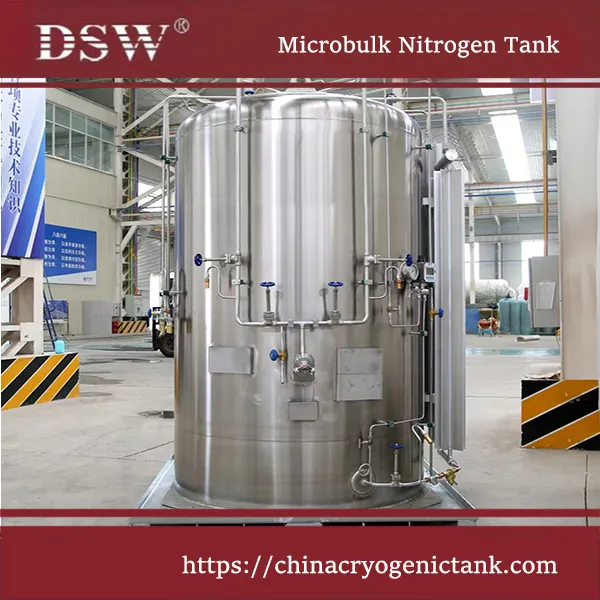
Cryogenic vaporizers are commonly installed downstream of vacuum-insulated storage tanks. The liquid gas flows from the tank through the vaporizer, absorbs heat, and exits as gas for industrial processes, pipeline distribution, or other applications.
Depending on the heat source and system design, vaporizers can operate through natural air convection, forced air circulation, water heating, electric heating, or steam heating.
Cryogenic vaporizers are commonly installed downstream of vacuum-insulated cryogenic storage tanks. The liquid gas flows from the tank through the vaporizer, absorbs heat, and exits as gas for industrial processes, pipeline distribution, or other applications.
How Does a Cryogenic Vaporizer Work?
The basic working principle of a cryogenic vaporizer is heat exchange. The cryogenic liquid absorbs heat from its surroundings or an external heating medium. As its temperature increases, the liquid undergoes a phase change and becomes gas.
A typical cryogenic gas supply system follows this process:
- Liquid gas storage: Cryogenic liquid is stored in a vacuum-insulated tank at a temperature appropriate for the gas.
- Liquid transfer: The liquid flows from the storage tank through the liquid outlet and connecting pipeline to the vaporizer.
- Heat absorption: Heat transfers from air, water, electricity, steam, or another heating medium through the vaporizer’s heat-transfer surfaces.
- Vaporization: The liquid absorbs heat and changes into gaseous form as it passes through the vaporizer.
- Gas delivery: The resulting gas flows through downstream equipment, such as pressure-regulating and distribution systems, to the point of use.
The actual outlet temperature and pressure depend on the gas properties, vaporizer design, operating pressure, flow rate, and available heat input. Some systems also require additional gas heating to achieve the specified outlet temperature.
Main Types of Cryogenic Vaporizers
Cryogenic vaporizers are classified mainly by their heat source and heat-transfer method. The most common configurations include ambient air, forced draft air, water bath, electric, and steam-heated vaporizers.
1. Ambient Air Vaporizer
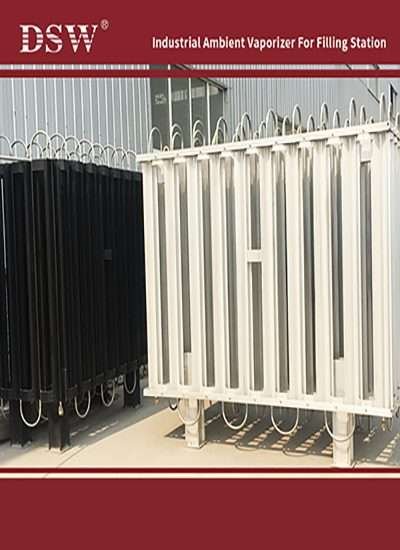
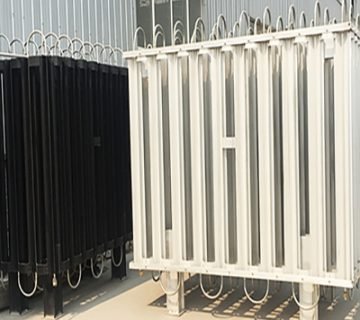
An ambient air vaporizer uses heat from the surrounding air to warm cryogenic liquid. It typically consists of aluminum heat-exchange tubes or finned elements that provide a large surface area for heat transfer.
As cryogenic liquid flows through the vaporizer, heat from the surrounding air transfers through the tube walls, causing the liquid to vaporize. The process does not require an external fuel source or electrical heating for normal operation.
Typical advantages:
- No direct heating fuel or electrical heating requirement.
- Relatively simple equipment configuration.
- Low operating energy consumption.
- Suitable for many industrial gas supply installations.
Operating considerations: Vaporization capacity depends on ambient temperature, humidity, airflow, frost formation, and operating conditions. Ice accumulation and reduced heat-transfer performance may limit continuous output. Multiple units or alternating operating arrangements may be used where continuous supply is required.
Ambient air vaporizers are widely used with liquid nitrogen, liquid oxygen, and liquid argon storage systems.
2. Forced Draft Air Vaporizer
A forced draft air vaporizer uses fans or blowers to move air across heat-exchange surfaces. Unlike a natural convection ambient air vaporizer, it actively circulates air to improve heat transfer.
The forced airflow helps maintain heat exchange when natural air movement is insufficient or when a more controlled vaporization process is required. Depending on the design, fan operation may be controlled according to operating conditions and gas demand.
Typical advantages:
- Improved air circulation across heat-transfer surfaces.
- Can support higher or more consistent heat-transfer rates than natural convection designs.
- Suitable for installations where available natural airflow is limited.
Operating considerations: Fan power, noise, maintenance, ambient conditions, and frost accumulation should be considered during equipment selection. Forced draft designs are not necessarily a separate heating principle; they are an air-side heat-transfer configuration.
3. Water Bath Vaporizer
A water bath vaporizer transfers heat to cryogenic liquid through a heated water bath or another suitable liquid heating medium. The cryogenic fluid passes through a heat exchanger immersed in or connected to the heated bath.
The water bath provides a relatively stable heat source. Depending on the equipment design, the bath may be heated by electricity, steam, or a combustion-based heating system.
Typical advantages:
- Relatively stable heat-transfer conditions.
- Suitable for applications requiring controlled heat input.
- Can be designed for different flow rates and gas supply requirements.
Operating considerations: Water temperature, heating capacity, circulation, water quality, and freeze protection must be considered. The heating arrangement should be designed for the specific cryogenic fluid and operating conditions.
4. Electric Vaporizer
An electric cryogenic vaporizer uses electrical heating elements to supply the heat required for vaporization. Heat is transferred to the cryogenic fluid through a suitable heat exchanger or heating medium, depending on the design.
Electrical controls can regulate heating output according to system demand and operating conditions. This makes electric vaporizers suitable for installations where a controllable heat source is preferred and sufficient electrical power is available.
Typical advantages:
- Controllable heating output.
- Compact configurations are available for different capacities.
- Can be integrated with automated gas supply systems.
Operating considerations: Electrical power availability, energy consumption, control systems, temperature limits, and electrical safety requirements must be evaluated. Equipment selection should also consider the gas service and the applicable hazardous-area requirements.
5. Steam Heated Vaporizer
A steam heated vaporizer uses industrial steam as its heat source. Steam transfers heat through a heat exchanger, warming the cryogenic liquid until it vaporizes.
This configuration can be suitable for industrial facilities that already have a reliable steam supply. The vaporizer design must account for steam pressure, heat-transfer requirements, condensate drainage, and process control.
Typical advantages:
- Uses an existing industrial heating utility where available.
- Can provide controlled heat input.
- Suitable for integration into larger industrial process systems.
Operating considerations: Steam availability, steam pressure, condensate management, heat exchanger design, and maintenance requirements should be assessed before selection.
Comparison of Cryogenic Vaporizer Types
Each vaporizer type has different operating characteristics. The appropriate choice depends on the required gas flow, ambient conditions, available utilities, operating schedule, and project requirements.
| Vaporizer Type | Heat Source | Main Characteristics | Key Considerations |
|---|---|---|---|
| Ambient Air | Surrounding air | Passive heat exchange, no direct heating energy | Weather, frost, and available heat-transfer area |
| Forced Draft Air | Air moved by fans | Enhanced air circulation | Fan power, noise, and maintenance |
| Water Bath | Heated water or liquid medium | Relatively stable heat transfer | Heating method, water quality, and temperature control |
| Electric | Electrical heating | Controllable heat input | Power supply and electrical safety |
| Steam Heated | Industrial steam | Uses an available plant utility | Steam pressure and condensate management |
Where Are Cryogenic Vaporizers Used?
Cryogenic vaporizers are used wherever liquefied gases need to be converted into gaseous form for storage, distribution, or industrial consumption. They are commonly integrated into the following systems:
Industrial Gas Supply
Industrial facilities use vaporizers to convert liquid nitrogen, oxygen, and argon into gas for manufacturing, metal processing, chemical production, and other industrial applications.
Medical and Healthcare Facilities
Liquid oxygen storage systems can use vaporizers to convert LOX into gaseous oxygen for appropriately designed medical gas supply installations. Such systems must meet applicable medical gas standards and safety requirements.
LNG Storage and Gas Supply
LNG vaporization systems convert liquefied natural gas into natural gas for industrial fuel supply, distribution networks, and other energy applications. The vaporizer configuration depends on the required capacity, operating pressure, and available heating utilities.
Research and Laboratory Applications
Laboratories and research facilities use cryogenic gases for scientific equipment, analytical processes, cooling systems, and specialized testing. Vaporizer selection depends on gas purity, flow stability, and the specific application.
How to Select the Right Cryogenic Vaporizer
Selecting a cryogenic vaporizer requires more than matching the equipment to the gas type. The design must provide the required gas flow and outlet conditions under the expected operating environment.
1. Gas Type
Identify the cryogenic liquid to be vaporized, such as LIN, LOX, LAr, or LNG. Material compatibility, operating temperature, and gas-specific safety requirements must be considered.
2. Required Flow Rate
Determine the normal and peak gas consumption of the downstream process. The vaporizer must be sized for the required flow under the specified design conditions, rather than relying only on a nominal capacity rating.
3. Operating Pressure
The vaporizer must be compatible with the system’s design pressure and operating pressure. Pressure drop through the vaporizer and connecting pipework should also be evaluated.
4. Outlet Temperature
Some applications require gas to reach a specified outlet temperature before entering downstream equipment. The required temperature affects heat-transfer area, heating capacity, and the need for additional gas heating.
5. Ambient and Site Conditions
For air-heated vaporizers, local temperature, humidity, airflow, and frost formation can affect performance. Installation space, ventilation, weather exposure, and maintenance access should also be assessed.
6. Available Utilities and Operating Schedule
Consider whether the facility has electricity, steam, or a suitable water heating system. The required operating hours, peak demand, standby arrangement, and continuity of gas supply can influence the preferred vaporizer configuration.
7. Applicable Standards and Safety Requirements
Confirm the applicable design codes, pressure equipment requirements, materials, instrumentation, and safety devices for the destination market and specific gas service.
Vaporizer Capacity and Operating Considerations
Vaporizer capacity is generally specified according to the amount of gas that can be produced under defined operating conditions. However, the actual performance of a vaporizer depends on more than its nominal capacity.
Important design considerations include:
- Continuous and peak flow: The equipment should meet both normal consumption and expected peak demand.
- Heat-transfer performance: Available heat-transfer area and the temperature difference between the heating medium and cryogenic fluid affect vaporization capacity.
- Ambient conditions: Air temperature, humidity, and frost accumulation can influence the output of air-heated designs.
- Pressure drop: Flow resistance through the vaporizer should be compatible with downstream pressure requirements.
- Standby capacity: Critical gas supply systems may require multiple vaporizers or an alternative supply arrangement to maintain continuity during maintenance or reduced performance.
- Instrumentation and protection: Pressure and temperature monitoring, control devices, and suitable safety protection should be included according to the system design.
For applications with variable demand or strict outlet temperature requirements, the vaporizer should be evaluated as part of the complete gas supply system rather than as an isolated piece of equipment.
Cryogenic Vaporizers in an Integrated Gas Supply System
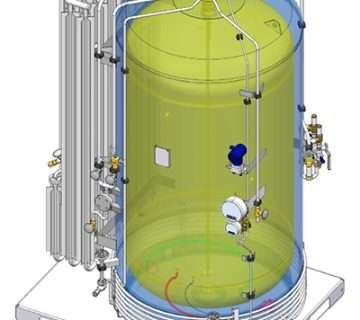
A cryogenic vaporizer normally operates as part of a wider storage and gas distribution system. A typical installation may include a vacuum-insulated cryogenic storage tank, liquid transfer pipeline, vaporizer, pressure control equipment, safety devices, and downstream gas distribution piping.
The storage tank holds the liquefied gas, while the vaporizer converts it into gaseous form. Pressure-regulating equipment and distribution pipelines then deliver the gas to the required process or point of use.
The system configuration depends on gas type, storage capacity, consumption profile, operating pressure, and site conditions. Proper coordination between the tank, vaporizer, pressure control equipment, and pipeline is important for reliable operation.
Learn more about cryogenic storage tanks and industrial gas supply systems.
TECHNICAL FAQs
FAQs About Cryogenic Vaporizers
Its main function is to convert cryogenic liquid into gas by transferring heat from an external source or the surrounding environment. The resulting gas can then be supplied to industrial processes or gas distribution systems.
Common applications include liquid nitrogen (LIN), liquid oxygen (LOX), liquid argon (LAr), and liquefied natural gas (LNG). The vaporizer must be specifically designed and approved for the intended fluid and operating conditions.
An ambient air vaporizer uses heat from surrounding air, while an electric vaporizer uses electrical heating elements to supply heat. Ambient air designs generally have lower direct energy requirements, while electric designs offer controllable heating output but require electrical power.
The heat-transfer surfaces become very cold during vaporization. Moisture in the surrounding air can condense and freeze on these surfaces, forming frost or ice. Accumulation can reduce heat transfer and affect vaporizer performance.
Capacity is determined by the required gas flow rate, cryogenic fluid, inlet and outlet conditions, operating pressure, heat source, and design ambient conditions. The equipment should be selected using the manufacturer’s performance data for the actual operating conditions.
This depends on the vaporizer type, design capacity, operating conditions, and heat source. Some air-heated vaporizers experience reduced performance as frost accumulates, so alternating units or additional heating arrangements may be needed for continuous gas supply.
Start with the gas type, required flow rate, operating pressure, outlet temperature, site conditions, available utilities, and operating schedule. The vaporizer should be selected as part of the complete cryogenic storage and gas supply system.
Find the Right Cryogenic Vaporizer for Your Application
Choosing a suitable cryogenic vaporizer requires matching the heat source, vaporization capacity, operating pressure, and outlet conditions to the actual gas consumption requirements. The right configuration helps support reliable gas supply and efficient system operation.
Explore our cryogenic vaporizer products or contact our team to discuss your gas type, required flow rate, operating pressure, and project conditions.

No comment