
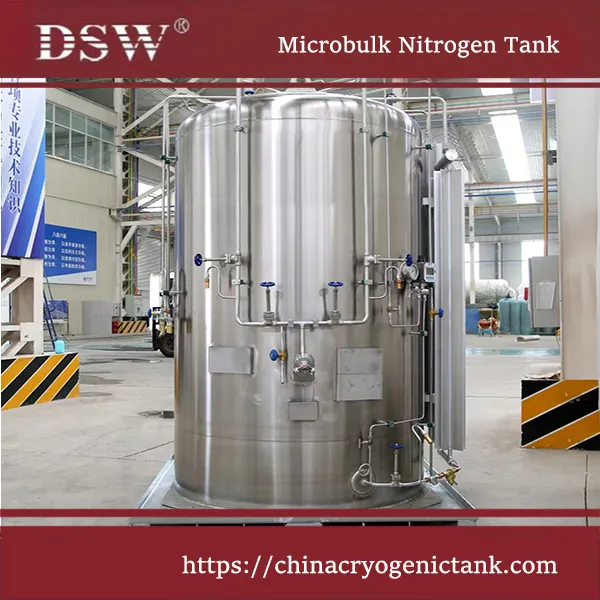
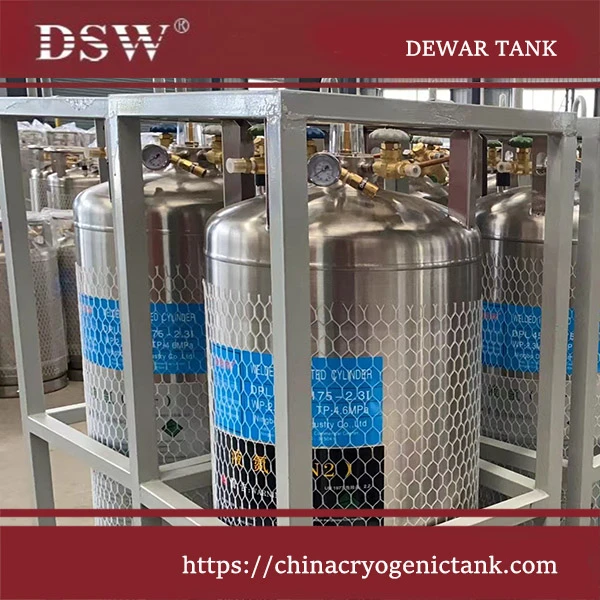
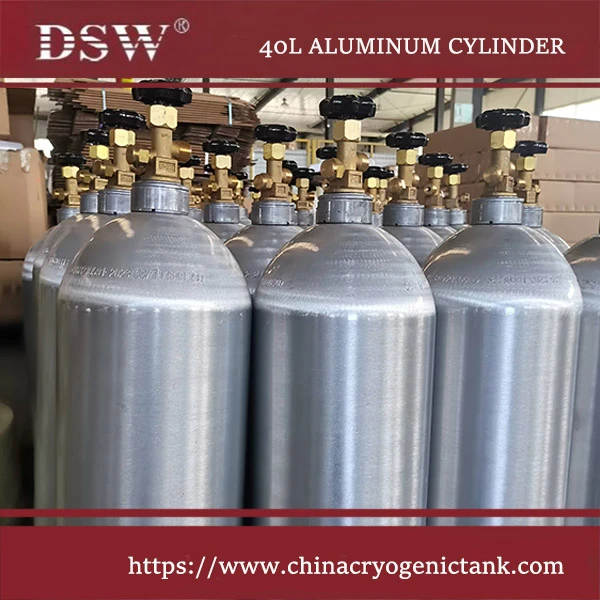
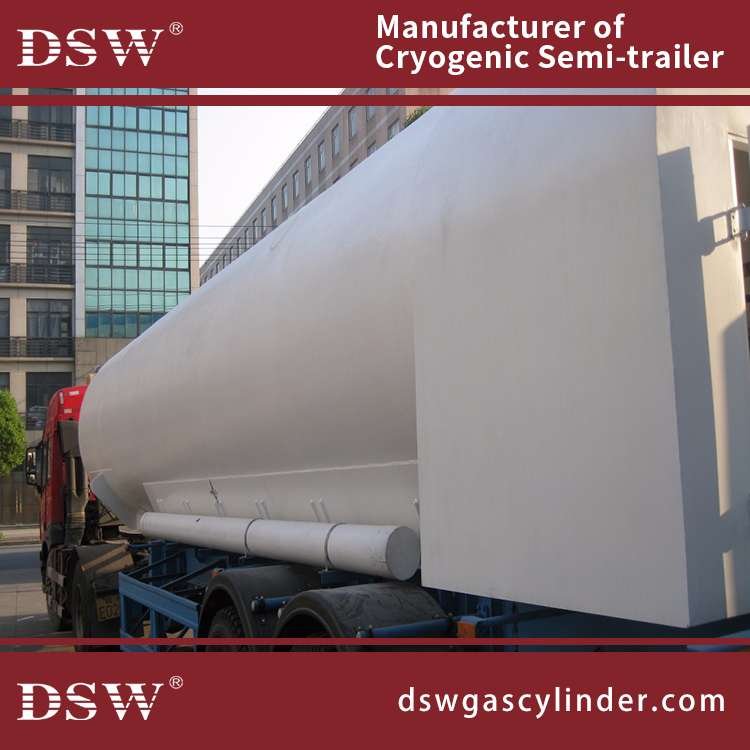
A cryogenic semi-trailer is a specialized road transport trailer designed to carry liquefied gases at extremely low temperatures. It consists of an insulated cryogenic tank mounted on a trailer chassis and connected to a tractor unit through a fifth-wheel coupling. This configuration enables the bulk transportation of industrial gases from production plants and distribution terminals to storage facilities and end users.
Depending on its design and approved operating conditions, a cryogenic semi-trailer can transport liquid nitrogen (LIN), liquid oxygen (LOX), liquid argon (LAR), or liquefied natural gas (LNG). Other liquefied products, such as liquid carbon dioxide (LCO₂), require equipment specifically designed for their operating conditions.
Unlike conventional liquid transport trailers, cryogenic semi-trailers require specialized insulation, pressure-vessel construction, temperature-compatible components, and safety systems. Their specifications must match the transported medium, required capacity, operating pressure, and applicable transportation regulations.
How Does a Cryogenic Semi-Trailer Work?
A cryogenic semi-trailer functions as a mobile storage vessel and bulk liquid delivery system. Its insulated tank reduces heat transfer from the surrounding environment, helping maintain the conditions required for transporting the specified cryogenic liquid.
Many industrial cryogenic trailers use a double-wall vessel consisting of an inner tank and an outer jacket. A vacuum-insulated space, often incorporating additional insulating materials, helps minimize heat ingress and reduce product losses during transportation.
The typical operating process includes the following stages:
- Filling: The tank is loaded with the specified cryogenic liquid at an approved filling facility.
- Transportation: The insulated vessel limits heat transfer while the trailer travels to its destination.
- Pressure management: The designed pressure-control and relief systems help maintain safe operating conditions.
- Unloading: The liquid is transferred through designated connections to a compatible receiving tank or process system.
- Inspection: The equipment is checked and prepared for its next operating cycle according to the applicable procedures.
The exact operating sequence depends on the transported medium, tank design, transfer method, and receiving facility.
Main Components of a Cryogenic Semi-Trailer
A cryogenic semi-trailer integrates a specialized pressure vessel, insulation system, road chassis, and liquid-transfer equipment. Each component must be suitable for the intended service.
1. Inner Vessel
The inner vessel contains the cryogenic liquid and is designed for the required operating temperature and pressure. Austenitic stainless steel is commonly used in many industrial cryogenic applications because of its low-temperature performance and corrosion resistance. The selected material must also be compatible with the transported medium and applicable design requirements.
2. Outer Jacket and Insulation System
The outer jacket protects the inner vessel and insulation system. Vacuum insulation, sometimes combined with perlite or multilayer insulation, reduces heat transfer between the inner vessel and the external environment. Insulation design affects thermal performance, product retention, and pressure management during transportation.
3. Trailer Chassis and Running Gear
The trailer chassis supports the tank and associated equipment. It typically incorporates the structural frame, axles, suspension, wheels, braking system, landing gear, and fifth-wheel connection. The chassis and running gear must be selected according to the tank load, permitted axle loads, tractor compatibility, and destination-market requirements.
4. Piping, Valves, and Transfer Connections
The piping system provides connections for filling, liquid discharge, and other designed operations. Cryogenic-compatible valves, fittings, seals, and hoses must be suitable for the product, temperature, pressure, and transfer procedure. The arrangement depends on the tank configuration and the requirements of the receiving installation.
5. Instrumentation and Safety Devices
Depending on the design, a cryogenic semi-trailer may include pressure gauges, liquid-level indicators, pressure-building circuits, economizer systems, pressure-relief devices, and emergency isolation arrangements. These components support monitoring, pressure control, and safe liquid transfer.
Equipment selection and operation must follow the manufacturer’s instructions and applicable safety requirements. Pressure-relief devices and other protective systems must not be isolated or modified outside approved procedures.
Cryogenic Semi-Trailer vs. Other Transport Equipment
The term semi-trailer describes a road trailer that connects to a tractor unit through a fifth-wheel coupling. A cryogenic tanker trailer describes tank-equipped transport equipment used for cryogenic liquids; it may be configured as a semi-trailer. A complete tractor-trailer combination includes both the tractor and the semi-trailer.
A cryogenic ISO tank container uses a tank mounted within a standardized container frame. It is intended for compatible handling and approved transport modes, potentially including road, rail, and marine transportation.
| Feature | Cryogenic Trailer | Cryogenic Semi-Trailer | Rigid Tanker Truck | Cryogenic ISO Tank |
|---|---|---|---|---|
| Configuration | A trailer equipped with a cryogenic tank; the specific chassis configuration varies. | A cryogenic tank mounted on a semi-trailer chassis. | A cryogenic tank mounted on an integrated truck chassis. | A cryogenic tank mounted within a standardized container frame. |
| Connection or mounting | Depends on the trailer type; may be designed for a tractor or another compatible towing vehicle. | Connects to a tractor unit through a fifth-wheel coupling. | The tank is mounted on the vehicle’s chassis. | Handled using compatible container transport and lifting equipment. |
| Detachable unit | Depends on the trailer configuration. | The trailer can be uncoupled from the tractor. | The tank normally remains mounted on the truck. | The tank container can be separated from its transport chassis using suitable handling equipment. |
| Typical applications | Cryogenic liquid transportation, depending on tank and chassis design. | Bulk road transportation of compatible cryogenic liquids. | Road delivery of cryogenic liquids, particularly where a rigid vehicle configuration is suitable. | Cryogenic liquid transportation using approved container handling and multimodal logistics systems. |
| Key selection factors | Tank capacity, chassis configuration, payload, and towing requirements. | Tank capacity, payload, tractor compatibility, axle loads, and road regulations. | Vehicle dimensions, payload, route restrictions, and delivery requirements. | Container dimensions, handling compatibility, transport approvals, and logistics requirements. |
Note: A cryogenic semi-trailer is a specific type of trailer configuration, so the terms “cryogenic trailer” and “cryogenic semi-trailer” can overlap. The term “cryogenic trailer” is broader and should not be treated as a completely separate engineering category unless the specific trailer configuration is defined.
The most suitable configuration depends on delivery volume, transport distance, loading and unloading facilities, and the logistics system. The tank and transport arrangement must also be approved for the intended product and service.
For a broader overview of equipment configurations, see our cryogenic transport solutions.
What Specifications Should Buyers Check?
Choosing a cryogenic semi-trailer requires more than selecting a nominal tank capacity. Buyers should evaluate the following specifications before requesting a quotation.
- Transported medium: Identify the exact liquid, such as LIN, LOX, LAR, or LNG, to establish the material, insulation, and safety requirements.
- Tank capacity: Specify the nominal vessel volume and evaluate usable liquid capacity, delivery demand, and payload limitations.
- Design and operating pressure: Define the required design pressure and normal operating pressure separately.
- Insulation system: Confirm the insulation arrangement and required thermal performance for the intended transport cycle.
- Dimensions and payload: Check overall dimensions, tare weight, axle loads, maximum permissible payload, and road restrictions.
- Loading and unloading: Specify filling connections, discharge configuration, transfer method, and receiving-site requirements.
- Applicable standards: Confirm the pressure-vessel design code, transport regulations, inspection requirements, and destination-market approvals.
- Tractor compatibility: Verify the fifth-wheel connection, coupling height, braking interfaces, and other vehicle requirements.
Providing these details at the quotation stage helps establish a suitable technical specification and reduces the risk of mismatches between the trailer and the operating environment.
Cryogenic Semi-Trailers for Industrial Gas Transportation
Cryogenic semi-trailers support the bulk distribution of industrial gases between production facilities, filling stations, distribution terminals, and end users. Their performance depends on the integration of the pressure vessel, insulation system, chassis, transfer equipment, and safety devices.
China Cryogenic Tank provides cryogenic transportation equipment for industrial gas and LNG applications. Equipment configuration should be based on the transported medium, required capacity, operating conditions, transport requirements, and applicable standards.
Explore our cryogenic transport trailers to review the available equipment options.
For a project quotation, prepare the required tank capacity, transported medium, design and operating pressures, destination country, applicable design standard, and loading and unloading requirements. These details help determine the appropriate configuration for your application.

No comment