
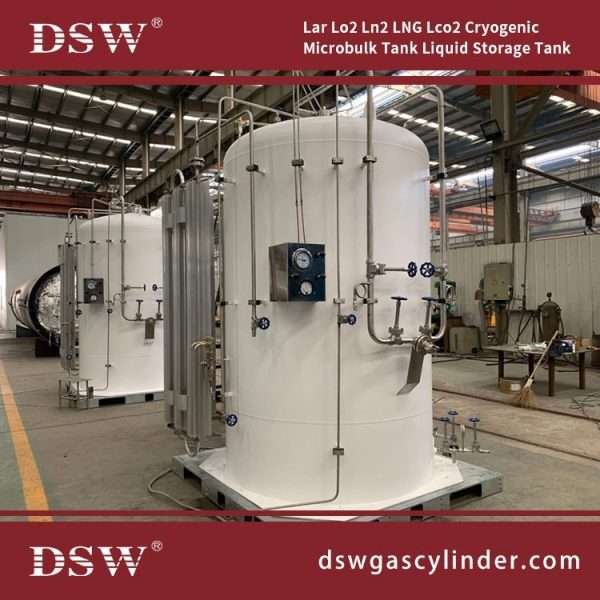
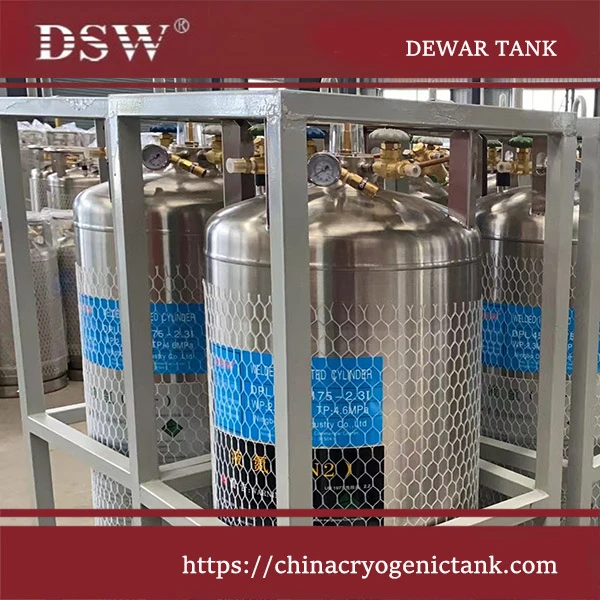
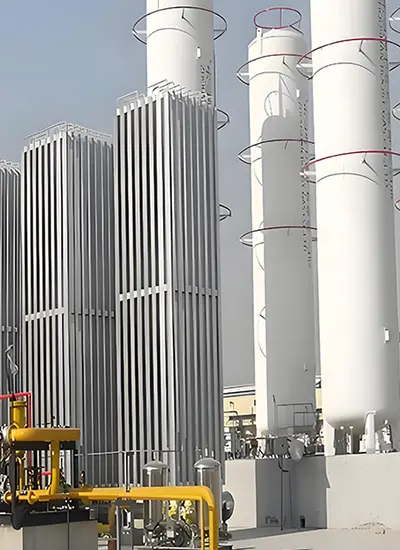
An LNG storage tank is a specialized cryogenic storage vessel or containment system designed to store liquefied natural gas (LNG) at very low temperatures. Because LNG is typically maintained near its boiling point of approximately -162°C (-260°F) at atmospheric pressure, LNG storage requires specialized materials, insulation, pressure-control systems, and safety equipment.
LNG is natural gas that has been cooled until it becomes a liquid. In liquid form, natural gas occupies roughly 1/600 of its gaseous volume, which makes LNG practical for large-scale storage and transportation.
LNG storage tanks are used throughout the natural gas supply chain, including LNG terminals, industrial facilities, power plants, LNG fueling stations, satellite LNG facilities, and small-scale LNG distribution systems.
This guide explains what an LNG storage tank is, how it works, what components it contains, how LNG is kept cold, how boil-off gas is managed, and where LNG storage tanks are used.
What Is LNG?
LNG stands for liquefied natural gas. It is natural gas that has been processed and cooled to cryogenic temperatures until it changes from a gas into a liquid.
LNG consists primarily of methane, although its exact composition depends on the source of the natural gas and the processing performed before liquefaction.
At approximately -162°C (-260°F) at atmospheric pressure, natural gas can exist as a liquid. When LNG is warmed, it changes back into natural gas vapor through a process known as regasification.
The large reduction in volume achieved through liquefaction makes LNG suitable for transportation and storage where conventional natural gas pipelines are not practical.
What Is an LNG Storage Tank?
An LNG storage tank is an engineered system designed to contain LNG safely while minimizing heat transfer from the surrounding environment.
Unlike a conventional atmospheric storage tank for water or other liquids, an LNG tank must operate under cryogenic conditions. Its design therefore has to address:
- Extremely low operating temperatures
- Thermal insulation
- Material performance at cryogenic temperatures
- Operating and design pressure
- Heat transfer and boil-off gas
- Pressure relief
- LNG filling and withdrawal
- Level, pressure and temperature measurement
- Emergency shutdown and safety systems
- Applicable design codes and regulations
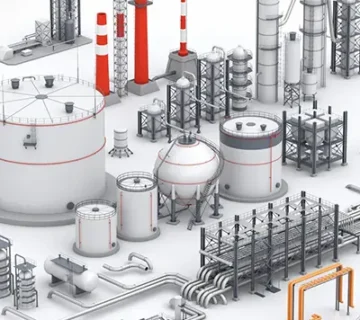
Depending on the application and storage scale, LNG storage can use different tank configurations. Smaller and medium-scale LNG facilities commonly use specialized cryogenic tanks, while large LNG terminals can use large-scale containment systems designed specifically for refrigerated LNG storage.
Therefore, the term LNG storage tank does not refer to one single tank design. The appropriate configuration depends on capacity, operating conditions, site requirements, containment philosophy, and application.
Why Does LNG Need a Special Storage Tank?
LNG requires specialized storage because it is maintained at an extremely low temperature.
If LNG receives heat from its surroundings, part of the liquid absorbs that heat and changes into natural gas vapor. This process is commonly referred to as boil-off.
A conventional carbon-steel liquid storage tank cannot simply be used to store LNG. The tank materials, insulation, pressure-control equipment, piping, valves, instrumentation, and safety systems must all be designed for cryogenic service.
The storage system must also accommodate changes in LNG pressure and vapor generation during filling, storage, and withdrawal.
This is why LNG storage tanks are engineered as complete cryogenic systems rather than simply as large containers.
How Does an LNG Storage Tank Work?
The basic operating principle of an LNG storage tank is relatively straightforward:
- Natural gas is liquefied at a dedicated liquefaction facility.
- LNG is transported to the storage facility.
- LNG enters the storage tank through the filling system.
- The tank’s insulation system limits heat transfer into the LNG.
- A small amount of LNG may vaporize due to unavoidable heat input.
- The tank manages vapor and pressure through its pressure-control and boil-off-gas systems.
- LNG is withdrawn from the tank when required by the downstream process.
- The LNG can then be pumped, vaporized, transported, or supplied to an end user.
The LNG value chain can include liquefaction, transportation, storage, regasification, and final delivery to industrial consumers, power plants, transportation systems, or natural gas distribution networks.
How Is LNG Kept Cold in a Storage Tank?
The purpose of an LNG tank’s insulation system is to minimize heat transfer from the environment into the LNG.
Depending on the tank size and design, LNG storage systems can use different insulation technologies. Smaller and medium-scale cryogenic tanks commonly use double-wall construction with vacuum insulation, while large LNG storage tanks use large-scale engineered insulation systems appropriate for their containment configuration.
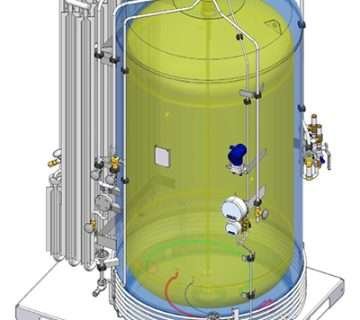
For example, double-walled vacuum-insulated pressure vessels use an inner vessel to contain LNG and an outer vessel or jacket surrounding the insulation space. The vacuum reduces gas conduction in the annular space, helping reduce heat transfer.
However, not all LNG storage tanks are vacuum insulated. Large LNG terminal tanks use different containment and insulation architectures and should not be treated simply as enlarged versions of small vacuum-jacketed cryogenic vessels.
This distinction is important when comparing LNG tank technologies.
What Is the Structure of an LNG Storage Tank?
The exact construction of an LNG storage tank depends on its capacity, pressure, containment concept, and application. However, an LNG storage system commonly contains several major elements.
1. Inner Tank or LNG-Containing Vessel
The inner vessel is the primary component that directly contains the LNG.
Because it is exposed to cryogenic temperatures, the material must retain suitable mechanical properties at the specified minimum design temperature.
Material selection depends on the tank design, LNG properties, pressure, temperature, applicable code, welding requirements, and project specifications.
2. Outer Vessel or Containment Structure
The outer structure surrounds the primary LNG-containing vessel in designs that use double-wall or secondary-containment construction.
Depending on the tank design, the outer structure can provide mechanical protection, contain insulation, maintain a vacuum space, or provide secondary containment.
3. Insulation System
The insulation system minimizes heat transfer into the LNG.
Insulation technology varies according to the size and type of LNG tank. Vacuum insulation is common in many smaller and medium-scale cryogenic pressure vessels, while large LNG tanks use engineered insulation systems suited to their containment structure.
4. LNG Filling System
The filling system allows LNG to enter the tank safely and may include fill piping, valves, check valves, isolation equipment, instrumentation, and other components required by the facility design.
5. LNG Withdrawal System
The withdrawal system allows LNG to leave the tank and supply downstream equipment.
Depending on the application, LNG can be transferred to pumps, vaporizers, fueling systems, process equipment, or other parts of the LNG distribution system.
6. Pressure-Control System
The tank must maintain pressure within its specified operating range.
Pressure-control equipment can include pressure-building systems, pressure-control valves, regulators, vapor return systems, and other components depending on the application.
7. Pressure Relief System
Pressure relief devices protect the tank against unacceptable overpressure conditions.
The relief system is an essential part of LNG storage design because heat input, filling operations, vapor generation, and abnormal operating conditions can affect tank pressure.
8. Instrumentation
LNG tanks normally require instrumentation to monitor important operating parameters such as:
- LNG level
- Tank pressure
- Temperature
- Vacuum condition where applicable
- Flow rate
- Valve status
- Alarm conditions
The exact instrumentation and control architecture depends on the facility and applicable engineering requirements.
What Is Boil-Off Gas in an LNG Storage Tank?
Boil-off gas (BOG) is natural gas vapor generated when heat enters an LNG storage system and causes part of the liquid to vaporize.
No practical insulation system completely eliminates heat transfer. Even a highly insulated LNG tank receives some heat from its surroundings.
As LNG vaporizes, the amount of gas in the tank increases and can affect tank pressure. LNG storage systems therefore need appropriate methods for managing vapor and pressure.
Depending on the facility, boil-off gas may be:
- Returned to a process system
- Used as fuel
- Compressed
- Recondensed
- Transferred to another part of the LNG system
- Managed through controlled pressure-relief systems where applicable
The appropriate BOG management strategy depends on the size of the facility, LNG residence time, tank design, operating conditions, and overall process configuration.
Does LNG Storage Tank Pressure Increase Over Time?
It can.
As heat enters the LNG tank, some LNG may vaporize. If the generated vapor is not removed, consumed, recondensed, or otherwise managed, tank pressure can increase.
This is why LNG storage tanks incorporate pressure-management systems and pressure-relief protection.
The actual pressure behavior depends on factors such as:
- Tank insulation performance
- LNG inventory
- Ambient temperature
- Tank operating pressure
- LNG composition
- Storage duration
- Filling and withdrawal operations
- Boil-off-gas management
There is therefore no single pressure-rise rate that applies to every LNG storage tank.
What Are LNG Storage Tanks Used For?
LNG storage tanks are used throughout the LNG supply chain.
LNG Import and Receiving Terminals
At an LNG receiving terminal, LNG can be transferred from LNG carriers into large storage tanks before being regasified and supplied to the natural gas network.
DOE describes LNG receiving facilities as locations where LNG is offloaded into well-insulated storage tanks before subsequent regasification and pipeline distribution.
LNG Export Facilities
At an LNG export facility, LNG can be stored after liquefaction before being transferred to LNG carriers or other transportation systems.
Industrial LNG Storage
Industrial facilities can use LNG storage tanks to maintain a reliable fuel supply where LNG is used for process heating, manufacturing, power generation, or other industrial applications.
LNG Fueling Stations
LNG fueling stations use cryogenic storage tanks to hold LNG before it is transferred to vehicles or other fueling systems.
Satellite LNG Facilities
Satellite LNG facilities receive LNG from another location and store it locally for subsequent use or regasification. This can provide natural gas to locations without direct access to a conventional pipeline network.
Peak-Shaving Facilities
LNG can also be stored for use during periods of increased natural gas demand. LNG peak-shaving facilities provide additional gas supply capacity when required.
What Are the Main Types of LNG Storage Tanks?
LNG storage tanks can be classified in several ways, including tank geometry, containment design, insulation technology, installation method, and application.
Common LNG storage solutions include:
- Vertical vacuum-insulated LNG tanks
- Horizontal LNG storage tanks
- Large above-ground LNG containment tanks
- Underground or below-grade LNG storage systems
- LNG ISO tank containers for transportation
These terms describe different engineering characteristics. For example, vertical describes tank geometry, while vacuum-insulated describes an insulation approach and full-containment describes a containment concept.
For a detailed comparison, see Types of LNG Storage Tanks.
What Materials Are Used in LNG Storage Tanks?
Material selection is one of the most important aspects of LNG tank engineering because the primary LNG-containing components can be exposed to extremely low temperatures.
Materials must be evaluated for their mechanical properties at the relevant cryogenic design temperature.
Depending on the tank design and applicable standards, cryogenic stainless steels, nickel steels, aluminum alloys, and other qualified materials may be used for different components.
The outer structure does not necessarily experience the same temperature as the LNG-containing vessel, so its material requirements can be different.
Material selection should therefore be based on the actual design temperature, pressure, loads, welding procedures, code requirements, LNG properties, and project specifications.
What Is the Difference Between an LNG Tank and an LPG Tank?
LNG and LPG are both liquefied gases, but their storage requirements are substantially different.
| Characteristic | LNG | LPG |
|---|---|---|
| Typical Composition | Primarily methane | Primarily propane, butane, or related hydrocarbon mixtures |
| Storage Principle | Cryogenic liquid storage | Generally pressurized liquid storage |
| Typical Storage Temperature | Approximately −162°C at atmospheric pressure | Much warmer than LNG and generally maintained as a liquid by pressure |
| Insulation | Critical for maintaining cryogenic conditions | Different thermal and storage requirements |
| Typical Tank Technology | Cryogenic storage tanks and large LNG containment systems | Pressurized bullet, spherical, and other LPG vessels |
DOE similarly distinguishes LNG, which is stored as a cryogenic liquid, from LPG, which is generally maintained as a liquid under pressure.
For this reason, an LNG storage tank should not be considered simply a larger version of an LPG storage tank.
What Is the Difference Between an LNG Tank and a Cryogenic Tank?
An LNG storage tank is a type of cryogenic storage tank, but not every cryogenic tank is an LNG tank.
The term cryogenic tank is a broader category that can include storage systems for products such as:
- Liquid nitrogen (LIN)
- Liquid oxygen (LOX)
- Liquid argon (LAr)
- Liquefied natural gas (LNG)
- Other cryogenic liquids
Different cryogenic liquids have different boiling points, pressures, material requirements, densities, and safety characteristics.
Consequently, a cryogenic tank must be designed for the specific product and operating conditions rather than treating all cryogenic liquids as interchangeable.
For a broader introduction to cryogenic tank technology, see our Cryogenic Tanks Guide.
LNG Storage Tank Safety
LNG storage requires carefully engineered safety measures because LNG is both cryogenic and flammable.
Important safety considerations include:
- Pressure relief and overpressure protection
- Appropriate containment
- Leak detection
- Methane gas detection where required
- Emergency shutdown systems
- Ventilation
- Fire protection
- Safe equipment spacing and facility layout
- Level and pressure monitoring
- Temperature monitoring
- Inspection and maintenance
- Personnel protection from cryogenic exposure
LNG can cause severe cold injuries on contact, while released natural gas can create fire and asphyxiation hazards under certain conditions. The U.S. Department of Energy’s Alternative Fuels Data Center identifies cryogenic exposure, gas detection, ventilation, and pressure management as important LNG safety considerations.
Applicable safety requirements depend on the tank type, facility, jurisdiction, and application. For example, NFPA 59A addresses the production, storage, and handling of LNG, while large refrigerated liquefied-gas tank systems can also involve other applicable engineering standards and regulatory requirements.
LNG Storage Tank Design Considerations
The design of an LNG storage tank depends on much more than its nominal volume.
Important design parameters can include:
- Required LNG storage capacity
- Working volume
- Design pressure
- Operating pressure
- Minimum design temperature
- LNG composition
- Material selection
- Insulation system
- Heat leak
- Boil-off-gas generation
- Filling and withdrawal rates
- Pressure-control requirements
- Foundation and settlement
- Wind and seismic loads
- Piping and nozzle loads
- Instrumentation and control
- Emergency shutdown systems
- Applicable codes and regulations
The tank must also be considered as part of the complete LNG system. Pumps, vaporizers, piping, valves, pressure-control equipment, instrumentation, and safety systems can all affect tank operation.
For a more detailed engineering discussion, see LNG Tank Design.
How Is LNG Stored Safely for Long Periods?
LNG can be stored for extended periods when the tank, insulation system, pressure management, and operating procedures are properly designed for the intended service.
The main challenge is managing the heat that inevitably enters the tank.
Good insulation reduces heat transfer, while pressure-control and boil-off-gas systems manage vapor generated during storage.
Storage duration therefore depends on the actual tank design rather than a universal number. Important variables include insulation performance, LNG inventory, ambient conditions, tank pressure, operating procedures, and BOG management.
What Determines LNG Storage Tank Capacity?
LNG tank capacity should be determined from the requirements of the complete LNG supply system.
Factors include:
- Daily or hourly LNG consumption
- Peak demand
- LNG delivery frequency
- Required reserve inventory
- Storage duration
- Filling and unloading schedules
- Available installation area
- Transportation logistics
- Future expansion requirements
It is also important to distinguish between geometric volume, nominal capacity, working capacity, and usable LNG inventory. These terms should not automatically be treated as the same value when specifying a tank.
A tank should be sized according to the actual operating envelope and required LNG service rather than simply selecting the largest available volume.
What Standards Apply to LNG Storage Tanks?
LNG storage tanks are subject to design, manufacturing, installation, inspection, and operational requirements that vary according to the tank type, location, application, and jurisdiction.
Depending on the project, requirements can involve standards and regulations covering:
- Cryogenic storage tanks
- Pressure vessels
- Refrigerated liquefied-gas storage
- LNG facility design
- Process piping
- Fire protection
- Electrical systems
- Inspection and testing
- Transportation
For U.S. LNG facilities, NFPA 59A is one important standard covering the production, storage, and handling of LNG. Large refrigerated liquefied-gas storage tank systems can also involve API 625 and other applicable requirements depending on the project.
Other countries may use different national or international standards. Therefore, the applicable design code should be established at the beginning of the engineering and procurement process.
Where Are LNG Storage Tanks Installed?
LNG storage tanks can be found in many parts of the LNG supply chain.
| Application | Purpose of LNG Storage |
|---|---|
| LNG Import Terminal | Store LNG after unloading before regasification or further distribution |
| LNG Export Facility | Store LNG before loading onto carriers |
| Industrial Facility | Maintain LNG fuel supply for industrial processes |
| Power Plant | Store LNG for natural gas-fired power generation |
| LNG Fueling Station | Store LNG for vehicle or equipment fueling |
| Satellite LNG Station | Receive and store LNG where pipeline gas is unavailable |
| Peak-Shaving Facility | Store LNG for periods of increased gas demand |
LNG Storage Tank vs LNG ISO Tank
An LNG storage tank and an LNG ISO tank are related but serve different purposes.
| Feature | LNG Storage Tank | LNG ISO Tank |
|---|---|---|
| Primary Function | Stationary LNG storage | Transportable LNG storage and transportation |
| Installation | Fixed installation | Transportable container |
| Typical Use | Industrial plants, terminals, fueling stations | Road, rail, sea, and multimodal LNG logistics |
| Container Frame | Not normally required | Standardized ISO frame |
For more information about transportable cryogenic tanks, see cryogenic ISO tanks.
Cryogenic Tanks FAQs
About What is an LNG storage tank?
An LNG storage tank is a specialized cryogenic vessel or containment system designed to store liquefied natural gas at very low temperatures, typically near -162°C (-260°F) at atmospheric pressure. It uses appropriate materials, insulation, pressure-control equipment, and safety systems to maintain LNG in liquid form.
LNG must remain at cryogenic temperatures to stay in liquid form. If heat enters the tank, part of the LNG vaporizes. A specialized tank minimizes heat transfer and manages the resulting vapor and pressure.
LNG is generally stored near -162°C (-260°F) at atmospheric pressure. The actual temperature depends on LNG composition and operating pressure.
Many small and medium-scale LNG cryogenic tanks use vacuum-insulated construction. However, large LNG terminal tanks generally use different large-scale insulation and containment systems and should not simply be classified as vacuum-insulated tanks.
Boil-off gas is natural gas vapor generated when heat enters the LNG storage system and causes part of the liquid to vaporize. LNG storage facilities use appropriate pressure-control and boil-off-gas management systems to handle this vapor.
LNG storage tanks are used at LNG terminals, industrial plants, power facilities, LNG fueling stations, satellite LNG facilities, peak-shaving facilities, and other locations where LNG must be stored before use, transportation, or regasification.
LNG is stored as a cryogenic liquid at approximately -162°C at atmospheric pressure, while LPG is generally stored as a pressurized liquid at substantially higher temperatures. Consequently, LNG and LPG require different tank technologies and design considerations.
An LNG tank is one type of cryogenic tank. The broader category of cryogenic tanks can also include tanks designed for liquid nitrogen, liquid oxygen, liquid argon, and other cryogenic products.
Conclusion
An LNG storage tank is a specialized cryogenic storage system designed to maintain liquefied natural gas at extremely low temperatures while controlling heat transfer, pressure, vapor generation, and safe product transfer.
The basic LNG storage system consists of an LNG-containing vessel or containment structure, insulation, filling and withdrawal equipment, pressure-control and relief systems, instrumentation, and safety systems. The exact configuration depends on the storage capacity, application, operating conditions, site, and applicable regulations.
Understanding the fundamentals of LNG storage is the first step toward selecting the appropriate tank technology. The next considerations are the type of LNG storage tank, tank design, capacity, materials, insulation, and applicable standards.
For a detailed comparison of different configurations, see Types of LNG Storage Tanks.
For engineering considerations including materials, pressure, insulation, boil-off gas, foundation, and tank systems, see LNG Tank Design.



No comment