
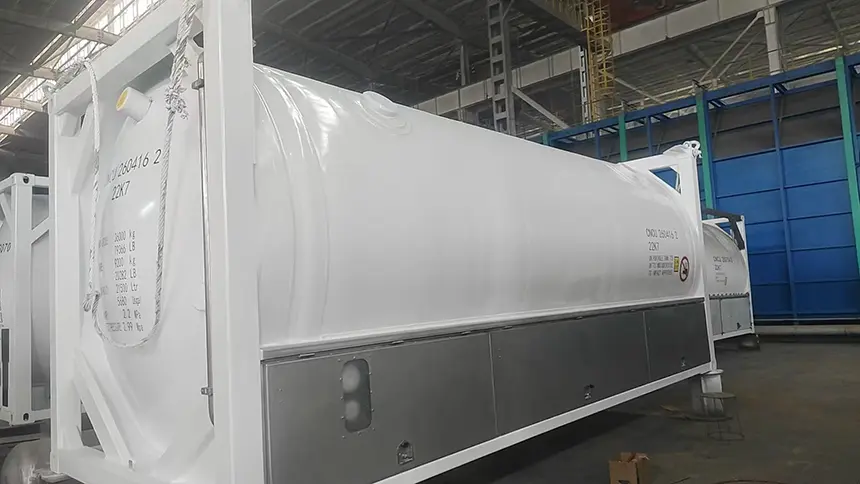
ISO tank containers are intermodal tanks designed to transport bulk liquids, liquefied gases, and certain pressurized dry bulk materials by road, rail, and sea. An ISO tank container consists of a pressure vessel or tank mounted within a standardized steel frame, allowing the tank to be handled and transported using standard intermodal equipment.
Unlike conventional drums, bottles, or other individual packages, an ISO tank container allows bulk cargo to remain in the same tank during different stages of transportation. This can simplify handling, reduce cargo transfers, and support efficient international logistics.
ISO tank containers are used in chemical, industrial gas, food and beverage, energy, and other industries where bulk materials need to be transported safely and efficiently. Their design, dimensions, testing, pressure rating, materials, and service equipment depend on the type of cargo and applicable transport requirements.
What Is an ISO Tank Container?
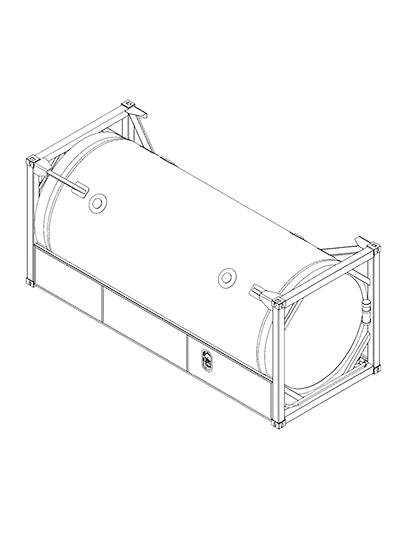
An ISO tank container is a tank container constructed for intermodal transportation and designed to meet applicable international container and tank requirements. It consists of two main elements: the tank itself and a structural frame that supports and protects the tank.
The frame incorporates standardized corner fittings so the tank can be handled by container-handling equipment and transported between different modes of transportation. UNECE describes the typical tank container used in the freight-container industry as a 20-foot tank consisting of a stainless-steel pressure vessel supported and protected within a steel frame.
ISO 1496-3:2019 specifies basic specifications and testing requirements for ISO Series 1 tank containers used for the carriage of liquids, gases, and solid substances that can be loaded or unloaded as liquids by gravity or pressure discharge. The standard covers their use in international transport by road, rail, and sea.
How Do ISO Tank Containers Work?
ISO tank containers are filled, transported, and discharged through dedicated valves, piping, and service equipment. The exact arrangement depends on the cargo, tank design, operating pressure, temperature, and applicable regulations.
During loading, the cargo enters the tank through designated filling connections. The tank is then closed and secured for transportation. During unloading, the contents can be discharged through the tank’s outlet system using gravity, pressure transfer, pumping equipment, or a combination of these methods, depending on the application.
For hazardous or pressurized cargo, the tank may incorporate equipment such as pressure-relief devices, shut-off valves, protective fittings, temperature or pressure instrumentation, and other safety systems required for the specific service.
The tank and its equipment must be suitable for the material being transported. Factors such as pressure, temperature, chemical compatibility, filling limits, and discharge requirements must be considered when selecting an ISO tank container.
What Can ISO Tank Containers Transport?
ISO tank containers are available in different designs for different types of bulk cargo. The cargo determines the required tank material, pressure rating, insulation, fittings, safety equipment, and applicable transport regulations.
Bulk Liquids
General-purpose and specialized tank containers can transport many types of bulk liquids, including industrial chemicals, food-grade liquids, oils, and other compatible products.
Liquefied Gases
Specialized tank containers can be designed for liquefied gases and other pressurized products. These applications require appropriate pressure ratings, materials, valves, relief devices, and regulatory approvals.
Cryogenic Liquids
Cryogenic ISO tank containers are designed for refrigerated liquefied gases that must be maintained at very low temperatures during transportation. Depending on the design, applications can include liquid nitrogen, liquid oxygen, liquid argon, liquid carbon dioxide, and LNG.
For cryogenic transportation applications, vacuum insulation and specialized cryogenic service equipment are commonly used to limit heat transfer and maintain the required cargo temperature.
Selected Dry Bulk Materials
ISO 1496-3 also covers certain tank containers for pressurized dry bulk materials that can be loaded or unloaded as liquids by pressure or gravity discharge. These should not be confused with non-pressurized dry bulk containers, which are covered by a different container standard.
Types of ISO Tank Containers
ISO tank containers can be classified according to their cargo, pressure, insulation, construction, and intended service.
General-Purpose ISO Tank Containers
General-purpose tank containers are used for transporting compatible bulk liquids. Their specifications vary according to the chemical and physical properties of the cargo.
Chemical ISO Tank Containers
Chemical tank containers are designed for industrial and chemical products that may require specific materials, pressure ratings, protective systems, and specialized valves or fittings.
Food-Grade ISO Tank Containers
Food-grade tank containers are designed for compatible food and beverage products. Hygienic construction, suitable materials, cleaning procedures, and appropriate filling and discharge connections are important considerations.
Gas ISO Tank Containers
Gas tank containers are designed for gases that require appropriate pressure containment and safety equipment. Their design must correspond to the properties of the gas and the applicable dangerous-goods requirements.
Cryogenic ISO Tank Containers
Cryogenic ISO tank containers are specialized transport tanks for refrigerated liquefied gases. They typically use an insulated inner vessel and protective outer structure to reduce heat transfer during transportation.
For more information about cryogenic transport tanks, see our cryogenic ISO tank containers.
Common ISO Tank Container Sizes
The majority of maritime tank containers are based on the 20-foot intermodal format. UNECE notes that most of the maritime tank-container fleet is 20 feet long and 8 feet 6 inches high, although other specialized configurations also exist.
Tank capacity varies according to the tank design, frame dimensions, cargo density, operating pressure, insulation requirements, and applicable regulations. UNECE technical material gives examples of 20,000-liter and 25,000-liter tank designs and notes that tank-container volumes can vary significantly.
| Configuration | Typical Application | Key Consideration |
|---|---|---|
| 10-Foot Tank Container | Specialized or smaller-volume applications | Compact dimensions and application-specific capacity |
| 20-Foot Tank Container | Standard intermodal bulk transportation | Most common tank-container format |
| Specialized Configurations | Specific cargo or transport requirements | Must meet the applicable dimensional and regulatory requirements |
Capacity should therefore be selected according to the cargo and transport requirements rather than by container length alone.
ISO Tank Container Standards and Regulations
The term “ISO tank” refers to a tank container designed according to applicable international container requirements. It does not mean that every tank can transport every type of cargo simply because it uses an ISO frame.
ISO 1496-3:2019 is the principal ISO standard covering Series 1 tank containers for liquids, gases, and pressurized dry bulk. It specifies basic construction and testing requirements for tank containers used in international intermodal transportation.
ISO 668 is also relevant to Series 1 freight-container dimensions and ratings, while other standards address areas such as corner fittings, identification, and container-related requirements.
For dangerous goods, additional requirements may apply depending on the cargo and transport mode. These can include the UN Model Regulations and regional or international regulations such as ADR, RID, ADN, and the IMDG Code.
For this reason, the applicable standards and approvals should always be confirmed for the specific cargo, route, tank design, and transport mode.
ISO Tank Containers and Safety Requirements
Safety is an essential consideration when transporting bulk liquids and gases. The tank, frame, valves, pressure-relief devices, connections, and other service equipment must be appropriate for the intended cargo and operating conditions.
Important safety considerations include:
- Compatibility between the cargo and tank materials
- Working pressure and design pressure
- Operating and design temperature
- Maximum permitted filling level
- Pressure-relief and shut-off systems
- Protection of valves and service equipment
- Inspection and testing requirements
- Correct loading, unloading, and handling procedures
- Compliance with applicable dangerous-goods regulations
When dangerous goods are transported, the tank shell and service equipment must comply with the applicable regulatory requirements for the substance and transport mode. UNECE guidance specifically notes that valves and pressure-relief devices should comply with the applicable dangerous-goods regulations.
Benefits of ISO Tank Containers
ISO tank containers provide several advantages for bulk transportation.
Intermodal Transportation
The standardized frame allows a tank container to move between road, rail, and sea transportation without transferring the bulk cargo to another container at every stage.
Efficient Bulk Transportation
A single tank can carry a substantial quantity of bulk cargo, reducing the need for numerous smaller packages and simplifying cargo handling.
Reduced Cargo Handling
Because the cargo can remain inside the same tank during different transport stages, fewer cargo transfers may be required compared with systems based on individual packages.
Reusable Equipment
ISO tank containers are designed as reusable transport equipment. Appropriate inspection, maintenance, cleaning, and testing are necessary to keep a tank suitable for continued service.
Flexible Applications
Different tank designs can be configured for chemicals, food products, gases, cryogenic liquids, and other compatible bulk materials.
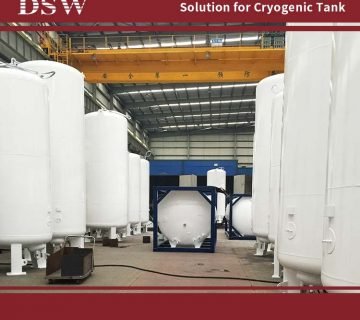
ISO Tank Container vs. Cryogenic Storage Tank
Although both systems may be used with cryogenic liquids, an ISO tank container and a stationary cryogenic storage tank have different primary purposes.
| Feature | ISO Tank Container | Stationary Cryogenic Storage Tank |
|---|---|---|
| Primary Purpose | Transportation | On-site storage |
| Mobility | Designed for intermodal transportation | Normally installed at a fixed location |
| Transport Modes | Road, rail, and sea | Not normally moved during operation |
| Structure | Tank mounted in an ISO frame | Tank with supports and site installation equipment |
| Typical Applications | International and regional cryogenic logistics | Industrial gas storage and supply |
For stationary industrial gas storage, see our cryogenic tanks guide.
ISO Tank Container vs. Tank Trailer
An ISO tank container and a tank trailer are both used for bulk transportation, but they are designed for different logistics systems.
| Feature | ISO Tank Container | Tank Trailer |
|---|---|---|
| Transportation System | Intermodal | Primarily road transport |
| Frame | ISO container frame | Trailer chassis |
| Road Transport | Yes | Yes |
| Rail Transport | Yes, where permitted | Not as a conventional trailer |
| Sea Transport | Designed for intermodal shipping | Not normally used as a sea-going tank unit |
| Best Suited To | Multimodal and international logistics | Dedicated road transportation |
The appropriate choice depends on the cargo, transport route, loading and unloading facilities, and applicable regulations.
How to Choose an ISO Tank Container
Selecting an ISO tank container requires more than choosing a tank by volume. The tank should be matched to the cargo and the complete transportation process.
1. Identify the Cargo
Determine whether the cargo is a liquid, liquefied gas, cryogenic liquid, or another material requiring a specialized tank design.
2. Check Material Compatibility
The tank material, seals, valves, piping, and other components must be compatible with the cargo.
3. Determine the Required Capacity
Select the useful volume according to cargo density, filling limits, transportation regulations, and the required quantity per shipment.
4. Check Pressure and Temperature Requirements
The tank must have suitable design and working pressure ratings and an appropriate operating temperature range for the cargo.
5. Determine Insulation Requirements
Some cargoes require thermal insulation or temperature-control equipment. Cryogenic liquids, for example, generally require specialized insulation to reduce heat transfer.
6. Confirm Transport Regulations
International and domestic transportation regulations can differ according to the cargo and route. The applicable requirements should be confirmed before selecting or ordering a tank.
7. Review Filling and Discharge Connections
Valve arrangement, outlet configuration, connection type, pressure-relief equipment, and other service components should match the loading and unloading facilities.
8. Consider Inspection and Certification
The tank should have the inspections, tests, approvals, and documentation required for its intended service and transport route.
Why Are ISO Tank Containers Used for International Transportation?
The main advantage of an ISO tank container for international logistics is its intermodal design. The tank can remain loaded while the transport unit moves between different modes of transportation, reducing the need to transfer the bulk cargo between separate containers.
The standardized frame also allows compatible lifting and handling equipment to be used at terminals. This makes ISO tank containers particularly useful for international supply chains involving multiple transportation modes.
ISO 1496-3 specifically addresses tank containers intended for international exchange and transportation by road, rail, and sea.
ISO Tank Container Manufacturing
Manufacturing an ISO tank container involves both the pressure vessel and the structural frame. The manufacturing process must account for the intended cargo, design pressure, operating temperature, structural loads, service equipment, and applicable standards.
Depending on the tank type, manufacturing may include pressure-vessel fabrication, welding, non-destructive testing, frame fabrication, insulation installation, valve and piping assembly, pressure testing, leak testing, dimensional inspection, and final inspection.
For specialized applications such as cryogenic transportation, additional attention is required for vacuum insulation, heat transfer control, cryogenic materials, pressure-relief systems, and low-temperature service conditions.
Conclusion
ISO tank containers are standardized intermodal tank units designed to transport bulk liquids, gases, and certain pressurized dry bulk materials. Their combination of a tank vessel and standardized structural frame allows them to be transported efficiently by road, rail, and sea.
The correct ISO tank container depends on the cargo, capacity, pressure, temperature, materials, insulation, transport route, and applicable regulations. A general-purpose liquid tank, chemical tank, gas tank, and cryogenic ISO tank can have significantly different technical requirements even though they share the same basic intermodal concept.
For cryogenic applications, cryogenic ISO tank containers provide a specialized solution for transporting refrigerated liquefied gases such as liquid nitrogen, liquid oxygen, liquid argon, liquid carbon dioxide, and LNG.


No comment