
MicroBulk tanks provide a compact on-site gas supply solution for facilities that need a reliable supply of industrial gases without installing a conventional large-capacity bulk tank. By combining cryogenic liquid storage with vaporization and pressure-control equipment, a MicroBulk system can reduce cylinder handling, simplify gas inventory management, and support consistent production operations.
MicroBulk gas supply systems are commonly considered for medium gas consumption in manufacturing, metal fabrication, laboratories, healthcare, food and beverage processing, and other applications. The right configuration depends on gas type, consumption rate, required flow, operating pressure, available space, and delivery access.
DSW Industry provides cryogenic storage equipment and gas supply solutions designed around application requirements. This guide explains how MicroBulk tanks work, their main advantages, how they compare with other supply methods, and what to consider when selecting a system.
WHAT IS MICROBULK TANK?
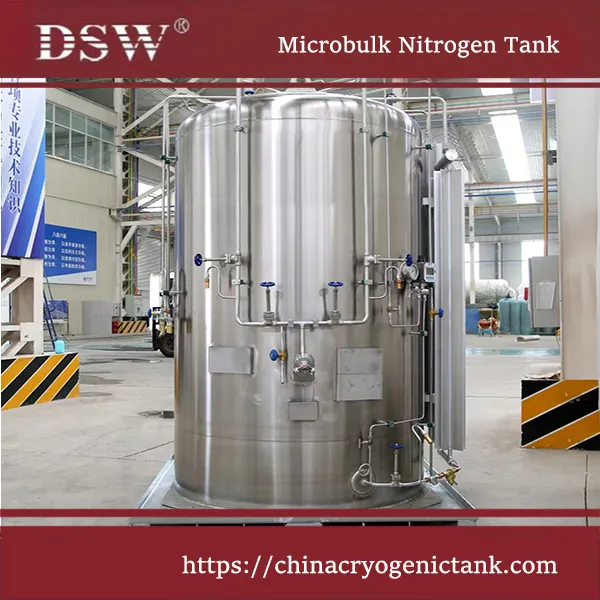
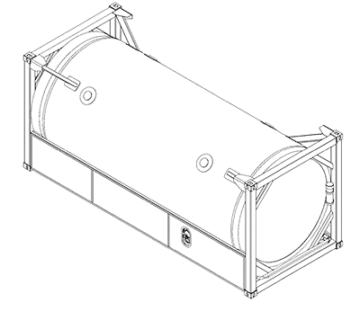
A MicroBulk tank system is a compact gas supply installation that typically stores an industrial gas as a cryogenic liquid and converts it into gas when required. Depending on the application, the system may include a vacuum-insulated storage vessel, a vaporizer, pressure-control equipment, valves, instrumentation, and connecting piping.
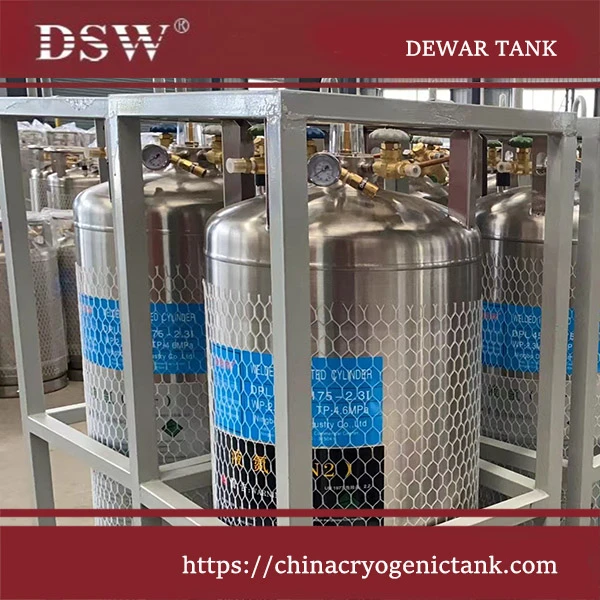
MicroBulk systems are designed to bridge the gap between individual high-pressure gas cylinders and larger bulk liquid storage installations. They can be suitable for facilities that consume more gas than is practical to manage efficiently with frequent cylinder changes but do not require the storage volume or infrastructure of a conventional bulk tank.
Common gases supplied through appropriately designed MicroBulk systems include nitrogen, oxygen, argon, and carbon dioxide. Equipment configuration, materials, operating pressure, and applicable safety requirements must be confirmed for the specific gas and service.
Explore DSW Industry’s MicroBulk tank range for equipment options related to on-site cryogenic gas storage.
How Does a MicroBulk Gas Supply System Work?
A MicroBulk system stores cryogenic liquid in an insulated vessel and supplies gas to the facility through a controlled vaporization and distribution process. The exact arrangement depends on the gas, required delivery pressure, flow rate, and system design.
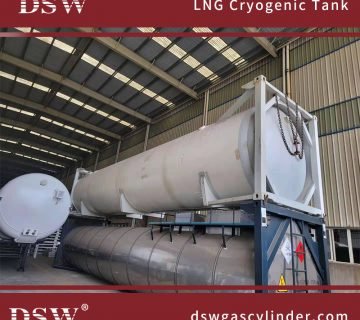
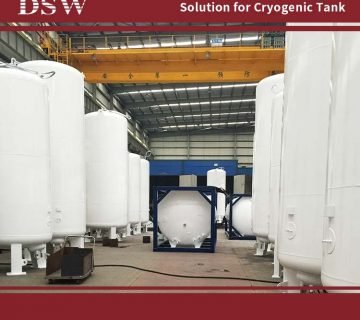
- Liquid gas storage: The insulated vessel stores the specified cryogenic liquid while limiting heat transfer from the surroundings.
- Vaporization: A suitable vaporizer converts the liquid into gas. An ambient air vaporizer may be used when the operating conditions and required flow are appropriate.
- Pressure control: Regulators and other pressure-control components help maintain the required downstream operating conditions.
- Gas distribution: The gas travels through a properly designed piping system to the production line, laboratory, or other point of use.
- Replenishment and monitoring: The stored liquid is replenished through scheduled deliveries or an agreed supply arrangement. Level and pressure monitoring can help operators plan replenishment and manage supply continuity.
System design should account for peak gas demand, ambient conditions, required pressure, vaporizer capacity, piping losses, and the operating characteristics of the gas. Appropriate safety devices, installation clearances, ventilation, and maintenance access are also important.
Learn more about ambient air vaporizers and their role in cryogenic gas supply systems.
Key Advantages of MicroBulk Tanks
1. Reduced Cylinder Handling and Changeovers
Replacing frequent cylinder changes with a central storage system can reduce the labor associated with moving, connecting, disconnecting, and tracking individual cylinders. This can be particularly useful for facilities where gas is consumed regularly throughout a shift or production cycle.
Fewer routine cylinder changeovers can also simplify stock management and reduce interruptions associated with depleted cylinders. The actual benefit depends on current cylinder usage, delivery frequency, and the design of the replacement system.
2. A More Consistent On-Site Gas Supply
A properly sized MicroBulk system can support a steady supply of gas between replenishment deliveries. Storage capacity, vaporizer performance, pressure regulation, and delivery planning must all match the facility’s consumption profile.
For processes that cannot easily accommodate interruptions, the system may be designed with suitable monitoring, alarms, reserve arrangements, or backup supply equipment where required. A MicroBulk installation does not automatically guarantee uninterrupted service; reliability depends on the complete supply design and operating procedures.
3. More Efficient Gas Inventory Management
Centralized storage can make gas inventory easier to monitor than a large collection of individual cylinders. Level indicators, telemetry, or remote monitoring may be available depending on the selected configuration.
Better visibility into remaining inventory can help users plan deliveries, reduce manual stock checks, and coordinate gas procurement with production requirements.
4. Potential Labor and Operating Cost Benefits
MicroBulk supply may reduce cylinder rental, handling, storage, and changeover-related labor costs in suitable applications. Liquid gas deliveries may also provide different unit economics from cylinder supply, depending on the supplier, gas specification, consumption volume, and contract terms.
However, the total cost of ownership includes equipment investment or rental, installation, delivery charges, maintenance, energy or operating requirements where applicable, and the cost of any backup supply. A comparison based on actual consumption and local supply quotations is the most reliable way to determine whether MicroBulk is cost-effective for a specific facility.
5. Efficient Use of Facility Space
A MicroBulk installation may reduce the floor area and handling space needed for storing and exchanging multiple cylinders. Its footprint and required clearances still depend on tank capacity, safety requirements, delivery access, piping routes, and maintenance needs.
Before installation, evaluate the proposed tank location, vehicle access, foundations where required, ventilation, separation distances, and the applicable local codes.
6. A Scalable Approach to Gas Supply
MicroBulk systems can offer a practical supply option for facilities whose gas demand is too high for convenient cylinder management but does not justify a larger bulk installation. Equipment selection should consider both current demand and realistic future growth.
Where consumption increases significantly, the facility may need a larger storage vessel, a higher-capacity vaporizer, revised pressure-control equipment, or a different supply arrangement. Confirm the available configuration with the equipment supplier before making expansion assumptions.
[/vc_column_text]
MicroBulk Tanks vs. High-Pressure Cylinders vs. Bulk Storage Tanks
The best gas supply method depends on consumption, delivery arrangements, operating pressure, available space, and investment requirements. The following table summarizes typical differences between the three approaches.
| Feature | MicroBulk System | High-Pressure Cylinders | Bulk Storage Tank |
|---|---|---|---|
| Supply method | Cryogenic liquid storage with vaporization where applicable | Compressed gas supplied from individual cylinders or cylinder bundles | Large-volume liquid storage with vaporization where applicable |
| Typical application | Medium or regular gas consumption | Lower, intermittent, or variable gas demand | Higher-volume or sustained gas demand |
| Replenishment | Periodic liquid deliveries | Cylinder or bundle replacement | Bulk liquid deliveries |
| Handling requirements | Can reduce routine cylinder handling | Requires cylinder handling and changeover procedures | Requires suitable bulk delivery access and site infrastructure |
| Space considerations | Requires tank space, safety clearances, and delivery access | Requires suitable cylinder storage and handling space | Requires space for a larger vessel and associated infrastructure |
| Investment considerations | Depends on equipment, installation, supply contract, and consumption | Depends on cylinder rental or purchase, handling, and gas pricing | May require greater initial site investment, depending on the arrangement |
| Key selection factor | Consumption, flow rate, storage capacity, and replenishment frequency | Gas usage pattern, cylinder logistics, and required supply pressure | High-volume demand, site conditions, delivery access, and operating costs |
These are general comparisons rather than universal rules. Actual costs and performance vary with the gas, system specification, supply contract, operating conditions, and local delivery arrangements.
Need Help specifying a MicroBulk system?
Share your gas type, consumption rate, pressure, storage capacity, and installation location to determine the right equipment configuration.
Applications of MicroBulk Gas Supply Systems
Manufacturing and Metal Fabrication
Manufacturing facilities may use nitrogen, argon, oxygen, or other suitable industrial gases for specific production processes. A MicroBulk system can help support recurring demand while reducing the routine work associated with cylinder changeovers. Gas purity, flow rate, pressure, and process requirements must be confirmed for each application.
Food and Beverage Processing
Depending on the gas and process, on-site gas supply can support applications such as packaging, blanketing, or beverage production. Food-grade requirements, gas quality, hygiene procedures, and applicable regulations must be addressed when selecting the supply system.
Laboratories and Research Facilities
Laboratories and research facilities may require a dependable supply of nitrogen, oxygen, argon, or other gases for instruments, testing, and specialized processes. The correct supply configuration depends on purity specifications, consumption patterns, pressure requirements, and the need for backup arrangements.
Healthcare and Specialized Facilities
Some healthcare and specialized facilities use gases that may be supplied through appropriately designed storage and distribution systems. Medical gas applications require equipment, materials, installation, monitoring, and compliance appropriate to the intended service. An industrial MicroBulk configuration should not be assumed suitable for medical use without the necessary verification and approvals.
Other Industrial Gas Applications
MicroBulk systems may also suit other operations with regular gas consumption and limited space for cylinder storage. The suitability of each application should be assessed against gas compatibility, demand profile, delivery access, safety requirements, and the complete cost of supply.
Limitations and Selection Considerations
Although MicroBulk tanks can simplify gas supply in suitable facilities, they are not the best option for every application. Consider the following factors before choosing a system.
- Gas consumption: Review average and peak demand, operating hours, seasonal variation, and expected future growth.
- Required flow rate: Confirm that the storage vessel, vaporizer, regulators, and piping can support the required flow under the expected operating conditions.
- Operating pressure: Select equipment rated for the required service pressure and compatible with the downstream system.
- Gas compatibility: Verify materials, valves, seals, instrumentation, and other components for the specific gas and intended service.
- Delivery access: Confirm that delivery vehicles can safely access the site and replenish the tank as required.
- Installation space: Allow for the vessel, safety clearances, maintenance access, piping, and any required foundations or protective measures.
- Safety and compliance: Assess applicable codes, pressure equipment requirements, ventilation, emergency procedures, and local installation rules.
- Total cost of ownership: Compare equipment and installation costs, gas pricing, delivery frequency, maintenance, and operating labor.
- Backup and monitoring: Determine whether alarms, remote monitoring, reserve supply, or automatic changeover arrangements are appropriate for the process.
A site assessment and an accurate consumption profile can help determine whether MicroBulk, cylinder supply, or a larger bulk installation is the most suitable option.
How to Choose the Right MicroBulk Tank
Choosing a MicroBulk tank requires more than selecting a storage volume. The storage vessel, vaporizer, pressure-control equipment, and distribution system must work together to meet the facility’s gas demand safely and reliably.
- Identify the gas: Specify the gas, required purity, and intended application.
- Calculate demand: Provide average consumption, peak flow, operating hours, and expected future requirements.
- Confirm operating pressure: Define the required pressure at the point of use and the operating conditions of the distribution system.
- Determine storage requirements: Estimate the storage capacity needed based on consumption, delivery lead time, replenishment frequency, and any required reserve.
- Select the vaporizer and controls: Match the vaporizer capacity and pressure-control arrangement to the actual gas demand and site conditions.
- Review the installation site: Check space, delivery access, piping routes, maintenance access, and applicable safety clearances.
- Verify compliance: Confirm the applicable design standards, pressure ratings, documentation, inspection requirements, and certifications for the destination market.
- Compare lifecycle costs: Evaluate the complete system and supply costs against cylinder and conventional bulk options.
For facilities with changing demand, it is also important to consider how the system can accommodate future growth. A properly specified installation can help balance storage capacity, delivery frequency, equipment performance, and operating costs.
MicroBulk Tanks and Cryogenic Storage Equipment from DSW Industry
DSW Industry supplies cryogenic storage equipment and supports industrial gas storage and supply applications. Selecting an appropriate configuration starts with understanding the gas, required storage capacity, operating pressure, flow rate, site conditions, and applicable standards.
Depending on the project, the required arrangement may include a vacuum-insulated storage vessel, a compatible vaporizer, pressure-control components, and related equipment. Final specifications should be confirmed against the intended gas service, operating conditions, destination-market requirements, and the equipment documentation.
Explore our MicroBulk tank products or learn more about our industrial gas supply systems to identify a suitable starting point for your application.
Cryogenic Tanks FAQs
About About MicroBulk Tanks
A key advantage is the ability to store gas on-site and reduce dependence on frequent high-pressure cylinder changes. Depending on the application, this can simplify handling, inventory management, and gas replenishment planning.
MicroBulk systems are used for gases such as nitrogen, oxygen, argon, and carbon dioxide when the equipment is specifically designed for the intended gas. Compatibility, purity, pressure, materials, and applicable safety requirements must be verified for each configuration.
Not in every situation. MicroBulk may be suitable when gas consumption is regular and cylinder handling has become inefficient. Cylinders may remain practical for lower or intermittent demand, smaller installations, or applications that require portable gas supplies.
The total cost depends on gas consumption, equipment investment, installation, delivery arrangements, maintenance, and gas pricing. MicroBulk may suit medium consumption where a larger bulk installation is unnecessary, but a cost comparison based on actual operating data is recommended.
A typical cryogenic MicroBulk configuration may include an insulated storage vessel, vaporizer, valves, pressure-control equipment, instrumentation, and connecting piping. The actual components depend on the gas, pressure, flow rate, and application.
Capacity selection should consider average and peak consumption, operating hours, delivery lead time, replenishment frequency, required reserve, and expected future demand. The vaporizer and pressure-control equipment must also meet the required flow and operating conditions.


No comment