
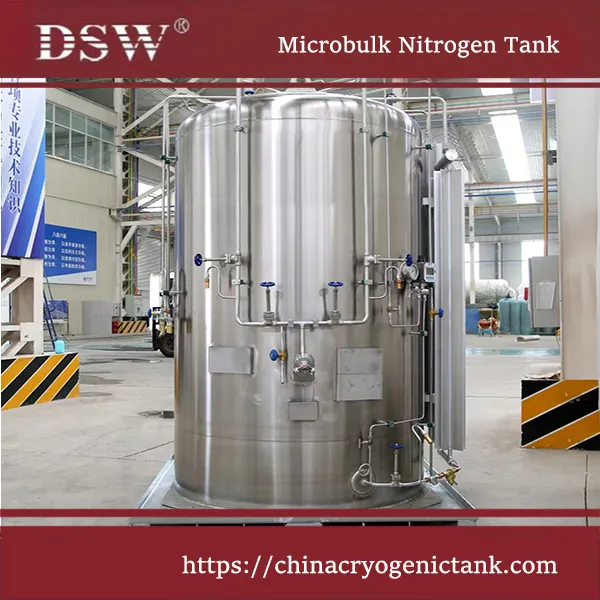
Microbulk gas supply solutions provide a practical middle ground between individual gas cylinders and large bulk cryogenic storage systems. They use a compact cryogenic storage tank, pressure-control equipment, vaporization and gas distribution components to provide a more continuous on-site supply of liquefied gas.
DSW Industry designs and manufactures microbulk equipment for industrial and commercial applications requiring reliable supplies of liquid nitrogen, liquid oxygen, liquid argon, liquid carbon dioxide and other compatible cryogenic gases.
What Is a Microbulk Gas Supply System?
A microbulk gas supply system is an on-site gas storage and delivery solution designed for users whose consumption is higher or more regular than conventional cylinder supply, but does not justify a large bulk storage installation.
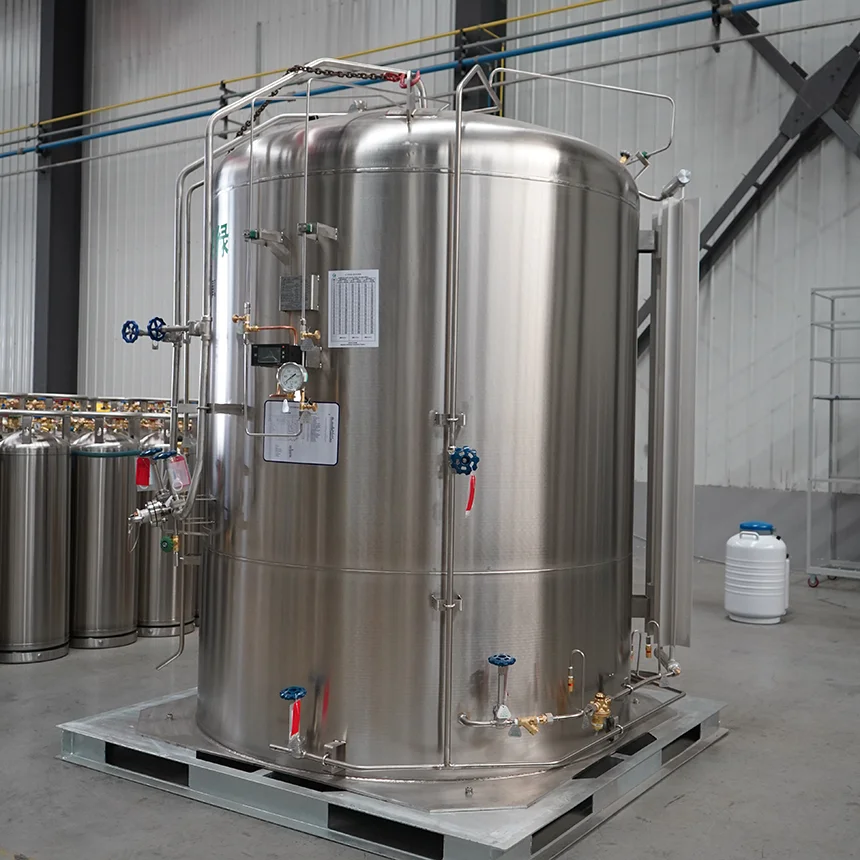
Instead of repeatedly handling and replacing individual cylinders, the system stores liquefied gas in a vacuum-insulated microbulk tank. The liquid can be vaporized and supplied as gas to the facility through a controlled distribution system.
A typical microbulk installation includes:
- Vacuum-insulated microbulk storage tank
- Pressure-building and pressure-control equipment
- Liquid and gas piping
- Cryogenic valves and filling connections
- Vaporizer when gaseous supply is required
- Pressure regulators
- Level, pressure and temperature instrumentation
- Safety and pressure-relief devices
- Gas distribution piping and point-of-use connections
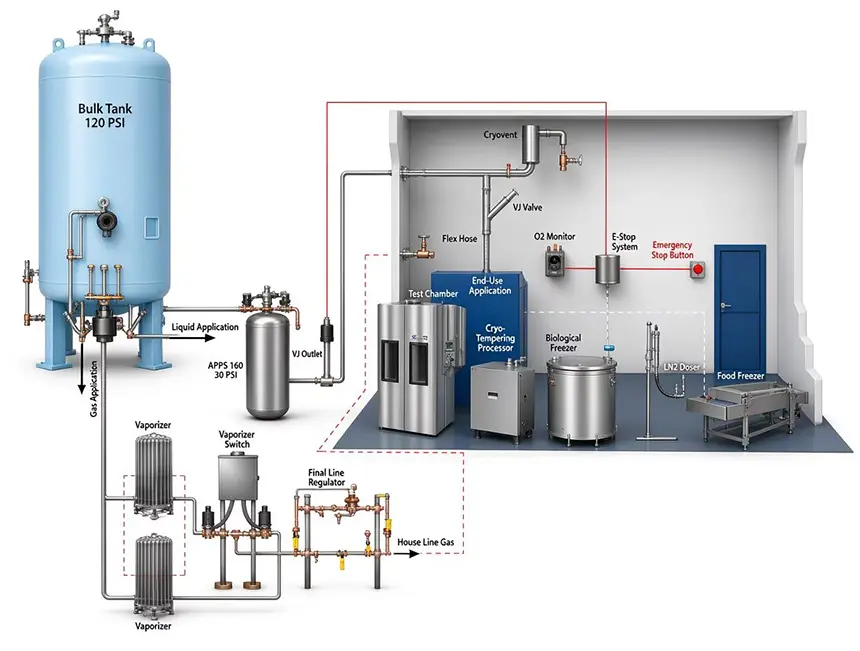
How Does a Microbulk Gas Supply System Work?
The basic process is:
Liquid gas delivery → Microbulk storage → Pressure control → Vaporization → Gas distribution → Point of use
Liquefied gas is delivered to the microbulk tank through a dedicated filling connection. The vacuum-insulated construction helps limit heat transfer and maintain the cryogenic liquid in storage.
When gas is required, liquid can be withdrawn from the tank and passed through a vaporizer. The resulting gas is regulated to the required operating pressure before entering the facility’s distribution network.
Instrumentation monitors tank pressure and liquid level, allowing operators to manage gas inventory and maintain a stable supply.
Microbulk Gases
Microbulk systems can be configured for several commonly used industrial gases, subject to the appropriate tank, materials, pressure rating and application requirements.
| Gas | Typical Applications | Typical Supply Configuration |
|---|---|---|
| Liquid Nitrogen (LN₂) | Inerting, food processing, electronics, laboratories, and metal processing | Microbulk tank + vaporizer + gas distribution |
| Liquid Oxygen (LOX) | Metal cutting, combustion, healthcare, and industrial processes | Microbulk tank + vaporizer + pressure control |
| Liquid Argon (LAr) | Welding, metal fabrication, and controlled-atmosphere processes | Microbulk tank + vaporizer + distribution system |
| Liquid CO₂ | Food and beverage, welding, water treatment, and industrial processing | Cryogenic storage + pressure control + distribution |
Microbulk vs. Cylinder Gas Supply
Microbulk supply is particularly useful when a facility has regular gas consumption and frequent cylinder replacement has become inefficient.
Microbulk vs. Cylinder Gas Supply
Microbulk supply is particularly useful when a facility has regular gas consumption and frequent cylinder replacement has become inefficient.
| Factor | Cylinder Supply | Microbulk Supply |
|---|---|---|
| Storage | Individual cylinders or bundles | Centralized cryogenic storage tank |
| Gas Delivery | Frequent cylinder deliveries | Bulk liquid deliveries to the tank |
| Handling | Cylinder handling and change-out | Reduced cylinder handling |
| Supply Continuity | Dependent on cylinder inventory | Continuous on-site supply between refills |
| Installation | Simple and flexible | Requires dedicated tank and supply infrastructure |
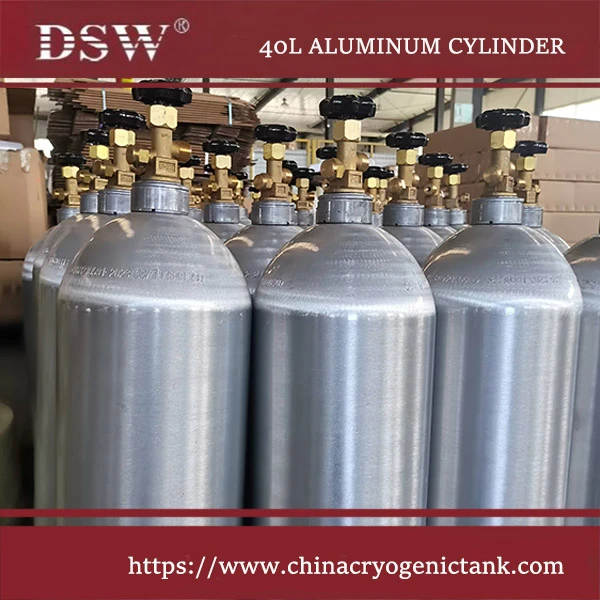
For facilities with low or intermittent consumption, cylinders may remain the most practical option. For larger continuous demand, a conventional bulk cryogenic tank may provide greater storage capacity. Microbulk systems occupy the intermediate range.
Benefits of Microbulk Gas Supply
Reduced Cylinder Handling
A centralized tank reduces the need for repeated cylinder change-outs, movement and storage of individual high-pressure cylinders.
More Consistent Gas Supply
On-site liquid storage provides a dedicated gas inventory and can support a more continuous supply to production equipment and other points of use.
Better Use of Facility Space
A properly designed microbulk installation can centralize gas storage and reduce the amount of floor and production space required for cylinder inventories.
Simplified Inventory Management
Tank level monitoring allows gas consumption and refill requirements to be managed from a centralized storage point rather than through numerous individual cylinders.
Reduced Operational Disruption
Eliminating frequent cylinder change-outs can reduce interruptions to production and make gas supply management more predictable.
Microbulk Gas Supply Applications
Microbulk systems are suitable for facilities with regular, moderate gas consumption where reliability, space efficiency and reduced cylinder handling are important.
- Metal fabrication: argon, oxygen and carbon dioxide for welding, cutting and metal processing.
- Food and beverage: nitrogen and carbon dioxide for food processing, packaging and beverage applications.
- Laboratories: nitrogen, argon and other cryogenic gases for research and analytical processes.
- Healthcare: oxygen and other compatible gases for medical gas supply applications.
- Electronics manufacturing: nitrogen and argon for controlled production environments.
- Chemical processing: nitrogen and other gases for inerting, blanketing and process applications.
- General industrial production: reliable gas supply for facilities with recurring daily consumption.
Microbulk System Configuration
The configuration should be selected according to gas type, consumption profile, peak flow, required pressure, storage duration, site conditions and applicable regulations.
| System Component | Function |
|---|---|
| Microbulk Tank | Stores the liquefied gas at cryogenic temperature. |
| Vacuum Insulation | Reduces heat transfer and helps maintain storage conditions. |
| Pressure-Building System | Generates tank pressure when required for gas withdrawal. |
| Vaporizer | Converts cryogenic liquid into gas at the required flow rate. |
| Pressure Control | Regulates gas pressure before distribution. |
| Instrumentation | Monitors tank level, pressure, temperature, and operating conditions. |
| Safety Equipment | Provides pressure relief and other application-specific safeguards. |
| Gas Distribution | Delivers gas from the storage system to the required points of use. |
Planning a microbulk gas supply project?
Tell us your gas type, consumption, pressure, capacity, and installation requirements for the right equipment configuration.
How to Select a Microbulk Gas Supply System
Microbulk equipment should be sized from the actual gas demand rather than tank volume alone. Important engineering parameters include:
- Gas type and physical properties
- Average and peak gas consumption
- Required operating pressure
- Required vaporization capacity
- Desired storage autonomy
- Gas purity requirements
- Available installation space
- Refilling and delivery conditions
- Ambient and site conditions
- Applicable pressure-vessel and safety standards
- Future expansion requirements
A complete evaluation should consider both normal consumption and peak demand so that the storage tank, vaporizer and distribution system can operate together without becoming a bottleneck.
Microbulk Tank Capacity
Microbulk tank capacity varies according to the gas, consumption rate, delivery frequency and required reserve. DSW supplies microbulk systems in compact capacities, including configurations around 2 m³, 3 m³ and 5 m³, with other configurations available according to project requirements.
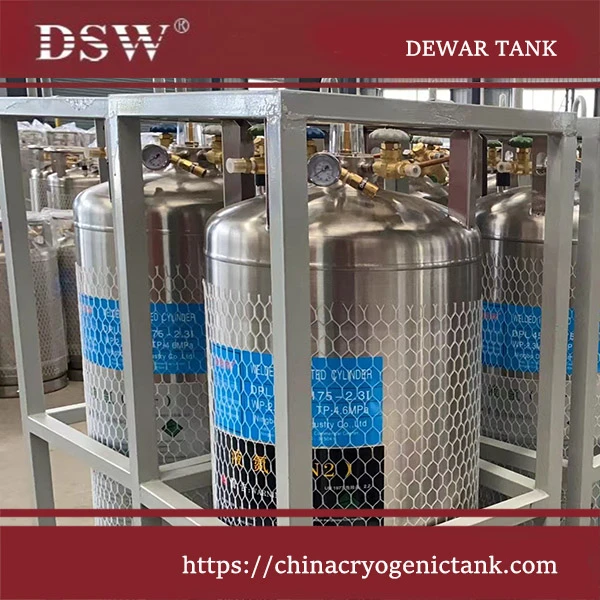
For larger consumption requirements, a conventional bulk cryogenic storage system may be more appropriate. For smaller or intermittent demand, cryogenic dewars or cylinders may provide greater flexibility.
Microbulk Gas Supply Equipment
DSW Industry provides equipment that can be combined into a complete microbulk gas supply configuration.
- Microbulk tanks
- Cryogenic microbulk tanks
- Pressure-building systems
- Cryogenic valves and piping components
- Cryogenic vaporizers
- Pressure-control equipment
- Instrumentation and monitoring components
- Gas distribution equipment
The final equipment configuration can be developed according to the gas medium, storage capacity, operating pressure, required flow rate and installation requirements.
Microbulk Gas Supply Solutions from DSW Industry
DSW Industry provides cryogenic storage and gas supply equipment for industrial applications. Our microbulk solutions are designed around the complete supply process rather than the storage tank alone.
From microbulk storage and pressure control to vaporization and gas distribution, the system can be configured to match the customer’s gas consumption and operating requirements.
For projects requiring higher storage capacity, explore our cryogenic storage solutions. For broader gas infrastructure requirements, see our industrial gas supply systems.