
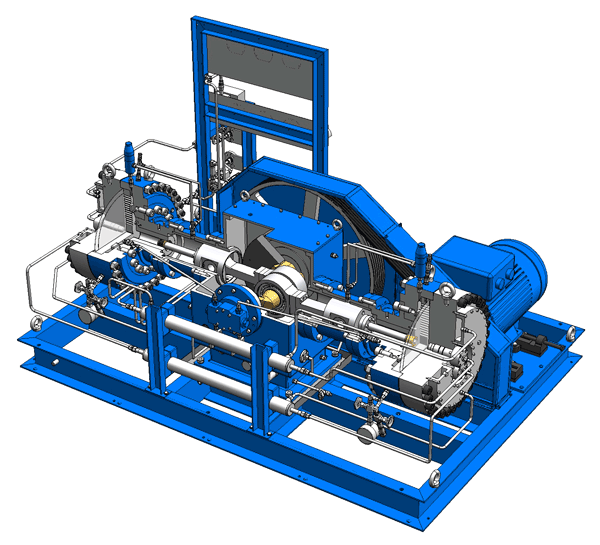
A diaphragm compressor is a positive-displacement gas compressor that uses a flexible diaphragm to reduce the volume of a gas chamber and increase gas pressure. Unlike conventional piston compressors that use dynamic seals in the gas cylinder, diaphragm compressors separate the process gas from the drive mechanism through a diaphragm assembly. This design makes them suitable for applications requiring controlled gas containment, high gas purity, or compression of selected hazardous and specialty gases.
Also known as a diaphragm gas compressor or membrane compressor, this equipment is used in applications such as hydrogen compression, specialty gas handling, chemical processing, and industrial gas supply. Explore our diaphragm gas compressors for related equipment options. The appropriate compressor depends on gas composition, required flow rate, suction and discharge pressures, material compatibility, and operating conditions.
This guide explains the diaphragm compressor working principle, main components, common design types, advantages, limitations, and industrial applications.
What Is a Diaphragm Compressor?
A diaphragm compressor uses the reciprocating movement of a flexible diaphragm to compress gas inside a sealed chamber. In a typical hydraulic diaphragm compressor, a crankshaft drives a piston that pressurizes hydraulic fluid. The fluid transfers force to a metal diaphragm, causing it to move and change the volume of the gas chamber.
The diaphragm separates the process gas from the hydraulic fluid and mechanical drive system. This arrangement helps reduce the risk of oil contamination and minimizes leakage paths associated with conventional dynamic piston seals in the gas chamber.
Depending on the design, diaphragm compressors can handle gases that require controlled containment or high purity. However, gas compatibility, pressure ratings, leakage protection, and allowable operating conditions must be verified for the selected model.

How Does a Diaphragm Compressor Work?
The working principle of a hydraulic diaphragm compressor is based on reciprocating motion, hydraulic pressure, and changes in gas chamber volume. The compression cycle generally consists of four stages.
1. Gas Intake
During the suction stroke, the diaphragm moves away from the gas-side cavity, increasing the chamber volume. When the chamber pressure falls below the inlet pressure sufficiently, the inlet valve opens and gas enters the compression chamber.
2. Hydraulic Actuation
A drive motor rotates the crankshaft, which converts rotary motion into reciprocating piston movement. The piston pressurizes the hydraulic fluid, transmitting force to the diaphragm and controlling its movement.
3. Gas Compression
As the diaphragm moves toward the gas chamber, the available volume decreases and the gas pressure rises. The diaphragm maintains separation between the process gas and the hydraulic system throughout normal operation.
4. Gas Discharge
When the gas chamber pressure exceeds the downstream pressure by enough to overcome the discharge valve’s opening requirements, the discharge valve opens and compressed gas flows into the outlet line. The cycle then repeats.
The actual compression ratio, discharge pressure, flow rate, and operating temperature depend on the compressor design, gas properties, and operating conditions.
Main Components of a Diaphragm Compressor
A hydraulic diaphragm gas compressor combines a gas compression assembly with a hydraulic actuation system. The following components are commonly found in this type of equipment, although the exact configuration varies by manufacturer and model.
| Component | Function |
|---|---|
| Metal diaphragm assembly | Separates the process gas from the hydraulic fluid and moves to compress the gas. |
| Hydraulic piston | Reciprocates to generate hydraulic pressure that actuates the diaphragm. |
| Crankshaft and connecting rod | Convert the drive motor’s rotary motion into reciprocating piston movement. |
| Gas inlet valve | Allows incoming gas to enter the compression chamber during the suction stroke. |
| Gas discharge valve | Controls the release of compressed gas into the downstream system. |
| Hydraulic check valves | Control hydraulic fluid flow within the actuation circuit. |
| Hydraulic pressure control system | Regulates hydraulic pressure and helps protect the compressor against abnormal operating conditions. |
| Hydraulic fluid replenishment system | Maintains the required hydraulic fluid level and compensates for fluid losses according to the design. |
| Cooling system | Removes heat generated during compression and hydraulic operation when required by the design. |
The diaphragm assembly, gas valves, hydraulic circuit, and pressure protection system must work together to maintain stable operation. Regular inspection and maintenance should follow the manufacturer’s instructions and the requirements of the specific gas service.
Types of Diaphragm Compressors
Diaphragm compressors can be classified by their actuation mechanism, diaphragm construction, and number of compression stages. These classifications describe different design characteristics and are not necessarily mutually exclusive.
Hydraulic Diaphragm Compressors
Hydraulic diaphragm compressors use pressurized fluid to transfer piston movement to the diaphragm. They are commonly used in industrial gas applications where controlled gas containment, high pressure, or gas purity is important. Their performance depends on the hydraulic system, diaphragm design, cooling arrangement, and operating conditions.
Mechanically Actuated Diaphragm Compressors
Mechanically actuated designs move the diaphragm through a mechanical drive mechanism rather than using hydraulic fluid as the primary means of actuation. These compressors are used in selected applications where their capacity, pressure range, and design characteristics meet the process requirements.
Metal Diaphragm Compressors
Metal diaphragm compressors use metallic diaphragms engineered for the specified gas, pressure, and operating conditions. They are often selected for specialty gas handling and applications that require separation between the process gas and the drive system. Diaphragm material and construction must be compatible with the gas being compressed.
Single-Stage and Multistage Diaphragm Compressors
A single-stage compressor performs compression in one stage. A multistage arrangement uses two or more stages when the required pressure ratio, gas properties, or thermal limits make staged compression appropriate. Interstage cooling and other design provisions may be needed, depending on the application.
Advantages of Diaphragm Gas Compressors
Diaphragm compressors offer several advantages for specialized industrial gas applications. Their suitability depends on the required pressure, flow rate, gas properties, and operating environment.
1. Reduced Risk of Gas Contamination
The diaphragm separates the process gas from the hydraulic fluid and drive mechanism. This arrangement helps reduce contamination risk and makes diaphragm compressors suitable for selected high-purity gas applications.
2. Improved Gas Containment
The sealed gas chamber and diaphragm arrangement minimize leakage paths associated with conventional dynamic piston seals in the gas cylinder. Actual leakage performance depends on the diaphragm assembly, valve design, connections, and maintenance condition.
3. Suitability for Selected Hazardous Gases
Properly engineered diaphragm compressors can handle certain toxic, corrosive, flammable, or expensive gases. Gas compatibility, hazardous-area requirements, ventilation, monitoring, and safety provisions must be evaluated for each application.
4. High-Pressure Gas Compression
Some diaphragm compressor models are designed for high-pressure service, including selected hydrogen and specialty gas applications. The maximum allowable discharge pressure and capacity must be confirmed from the manufacturer’s technical specifications.
5. Controlled Process-Gas Handling
The diaphragm provides a physical separation between the process gas and the hydraulic system. With appropriate materials, valves, instrumentation, and protection systems, this arrangement can support demanding gas handling requirements.
Limitations and Maintenance Considerations
Although diaphragm compressors offer important benefits, they are not the best solution for every gas compression application. Their limitations should be evaluated before selecting equipment.
- Capacity requirements: Depending on the design, a diaphragm compressor may provide a lower flow rate than alternative compressor technologies of comparable size.
- Diaphragm fatigue: Repeated flexing can cause wear or fatigue, making condition monitoring and scheduled inspection important.
- Valve maintenance: Inlet and discharge valves require inspection to maintain compression performance and reduce the risk of leakage or capacity loss.
- Cooling requirements: Compression generates heat, so suitable cooling may be required to maintain acceptable operating temperatures.
- Gas compatibility: Diaphragm materials, valve components, seals, and other wetted parts must be suitable for the process gas.
- Operating costs: Initial equipment cost, replacement parts, maintenance intervals, and service availability should be considered alongside performance requirements.
Follow the equipment manufacturer’s maintenance schedule. Where hazardous gases are involved, establish appropriate inspection, leak detection, pressure protection, and emergency shutdown procedures based on the system design and applicable regulations.
Industrial Applications of Diaphragm Compressors
Diaphragm gas compressors are used in applications where gas purity, containment, material compatibility, or high discharge pressure is a priority. They may also form part of integrated industrial gas supply systems that coordinate compression, storage, pressure control, and gas distribution. Common application areas include:
- Hydrogen compression: Compressing hydrogen for selected industrial processes, testing systems, and specialized gas supply applications.
- Specialty gas handling: Compressing high-purity or expensive gases where minimizing contamination is important.
- Chemical processing: Handling selected reactive, corrosive, or hazardous gases with suitable equipment materials and safety provisions.
- Laboratory and research systems: Supplying compressed gas for analytical equipment, experimental systems, and specialized test facilities.
- Industrial gas filling: Supporting gas transfer and filling systems when the required pressure, flow, gas compatibility, and applicable standards are satisfied.
- Gas recovery and recycling: Compressing selected process gases for recovery, reuse, or downstream treatment.
Not every diaphragm compressor is suitable for every gas or application. Hydrogen, toxic gases, corrosive gases, and high-pressure systems require careful evaluation of materials, operating limits, leakage protection, and relevant safety standards.
Diaphragm Compressor vs. Conventional Piston Compressor
Diaphragm compressors and conventional reciprocating piston compressors both use reciprocating motion, but their gas compression arrangements differ. The right choice depends on the required gas purity, pressure, capacity, leakage control, and operating costs.
| Comparison Factor | Diaphragm Compressor | Conventional Piston Compressor |
|---|---|---|
| Gas compression mechanism | A flexible diaphragm changes the volume of the gas chamber. | A piston moves inside a cylinder to compress gas. |
| Gas and lubricant separation | The diaphragm separates the process gas from the hydraulic system. | Depends on piston seals, lubrication arrangement, and compressor design. |
| Gas purity | Suitable for applications requiring low contamination risk. | Depends on the design, materials, lubrication, and gas-contact components. |
| Leakage control | The diaphragm reduces dynamic sealing paths in the gas chamber. | Dynamic piston seals and other connections require suitable leakage control. |
| Typical applications | Selected high-purity, specialty, hazardous, or high-pressure gas services. | A wide range of industrial gas and air compression applications. |
| Selection priorities | Gas containment, purity, pressure, flow, and diaphragm compatibility. | Capacity, pressure, efficiency, maintenance, and gas service requirements. |
Neither technology is universally superior. A compressor should be selected according to the process requirements and verified performance data rather than technology type alone.
How to Select a Diaphragm Compressor
Choosing the right diaphragm compressor requires a clear understanding of the gas service and operating conditions. For facilities handling liquefied industrial gases, cryogenic gas storage solutions may also need to be considered as part of the overall supply system. Evaluate the following factors before specifying or purchasing equipment.
- Gas composition: Identify the gas, impurities, moisture content, and any corrosive, toxic, or flammable characteristics.
- Required flow rate: Specify the required gas delivery rate and the reference conditions used to express it.
- Suction and discharge pressure: Confirm inlet pressure, target outlet pressure, pressure ratio, and allowable pressure fluctuations.
- Materials compatibility: Verify diaphragm, valve, seal, and piping materials against the process gas.
- Temperature and cooling: Consider gas temperature, ambient conditions, compression heat, and cooling requirements.
- Duty cycle: Define continuous or intermittent operation, expected operating hours, and startup conditions.
- Safety and compliance: Check applicable pressure equipment regulations, hazardous-area requirements, gas handling standards, and required protective systems.
- Maintenance and service: Review diaphragm replacement intervals, spare parts availability, service support, and total cost of ownership.
Providing these details helps the equipment supplier determine whether a diaphragm compressor is appropriate and identify a configuration that meets the required performance and safety criteria.
TECHNICAL FAQs
About Diaphragm Compressor
A diaphragm compressor increases gas pressure by reducing the volume of a sealed chamber with a flexible diaphragm. It is commonly selected when gas purity, containment, or specialized high-pressure service is important.
A diaphragm compressor separates the process gas from the hydraulic fluid, helping prevent direct contact between them. However, the term oil-free should be used carefully because the compressor may still contain hydraulic oil, and overall gas purity depends on the complete system design and condition.
Yes. Diaphragm compressors are used in selected hydrogen compression applications. The compressor must be specifically designed and rated for hydrogen service, with appropriate materials, pressure ratings, sealing arrangements, and safety provisions.
A diaphragm compressor uses a flexible diaphragm to isolate the process gas from the drive system. A conventional piston compressor compresses gas through the movement of a piston inside a cylinder. The best option depends on gas purity, leakage control, capacity, pressure, and operating requirements.
Maintenance may include inspecting the diaphragm, checking inlet and discharge valves, monitoring hydraulic fluid, verifying pressure protection devices, and checking for leakage or abnormal vibration. Follow the manufacturer’s maintenance instructions for the specific model and gas service.
Conclusion
Diaphragm compressors provide a specialized solution for compressing gases where containment, purity, material compatibility, or high discharge pressure is important. To explore related equipment and selection guidance, browse our industrial gas equipment guides.
Before selecting a diaphragm gas compressor, evaluate the gas composition, required capacity, inlet and outlet pressures, temperature, safety requirements, and maintenance needs. A technically matched compressor can help support reliable gas handling and consistent process performance.
For related industrial gas equipment, explore the relevant gas compressor equipment category, if available on this website, or consult DSW Industry about your industrial gas storage and handling requirements.

No comment